
Building a winning strategy without burning your budget feels like assembling a jet engine with duct tape. Most teams post endless blog posts and wonder why traffic stays stuck at zero.
American Design Hub cuts through the corporate noise. Stop guessing what search engines want. You need a technical blueprint that forces Google to index your pages and rank them at the top.
Whether you refine an enterprise roadmap or follow a local seo checklist, execution determines survival.
This blog guide breaks down ten technical pillars to scale organic revenue. Learn now how to build an seo content strategy that drives organic traffic without publishing worthless filler.
Align Content with Search Intent
Pages that instantly provide users with precise answers are ranked higher by search engines. Before crafting a single sentence, analyse search engine results pages to determine the main purpose.
Sort searches into categories such as transactional, commercial, navigational, or informational. Long-form technical courses, structured lists, and video blocks are examples of top-ranking URLs that show what Google is looking for. Compare the winning papers’ exact structure, tone, and depth.
Don’t publish a generic essay if the top results display comparison tables. To address relevant questions, respond to sub-questions located in the People Also Ask blocks.
High bounce rates, short dwell times, and, ultimately, indexation declines are inevitable when user expectations are not met.
By responding to user queries more quickly than rivals, you can secure target phrases.
Build Topic Clusters & Pillar Pages
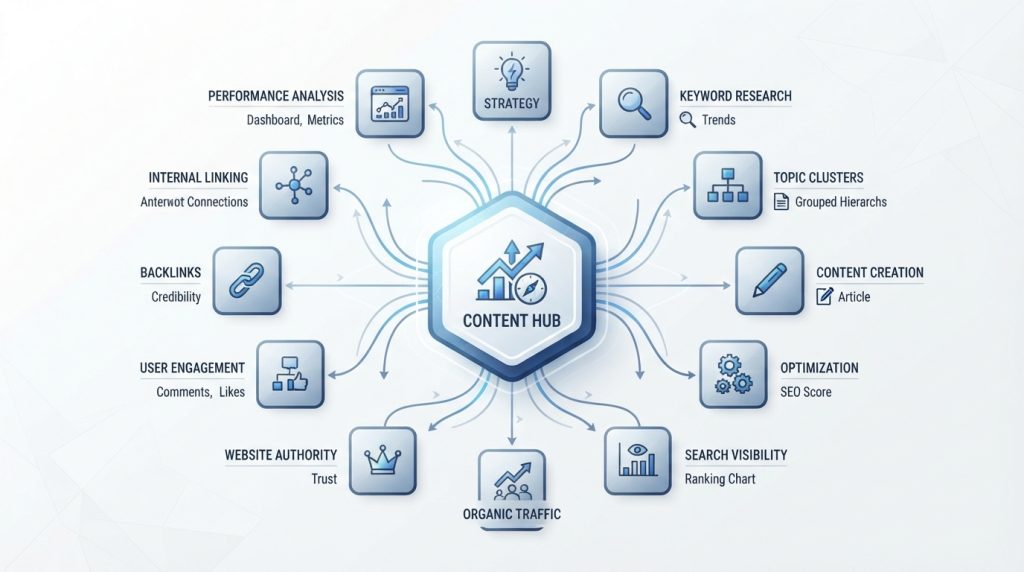
Search crawlers are confused by fragmented websites created by random posting. To create genuine topical authority, build large parent topic clusters around a central pillar page.
While subpages focus on specific subtopics, pillar pages discuss a big topic in depth. Use informative anchor text to link each subpage back to the main pillar page.
Contextual internal linking passes link equity across the entire cluster, telling search bots your domain covers the master topic completely.
Avoid keyword overlap across subpages, which causes self-cannibalisation in search results.
Standardise URL paths to reflect topical depth and site hierarchy. Structuring site architecture this way helps search algorithms understand content context and index specialised technical coverage much faster.
Target Low-Competition Long-Tail Keywords
Chasing short-head terms with massive search volume burns resources when your domain rating is low. Focus on low-competition long-tail queries that carry clear commercial intent.
These multi-word phrases have lower individual search volume but yield higher conversion rates because searchers know what they want. Extract long-tail variations by analysing search console data, forum discussions, and n-gram keyword models.
Look for search terms where top-ranking domains lack authority or possess thin content. Targeting specific niche queries lets smaller sites build early organic momentum.
Over time, ranking for hundreds of long-tail phrases builds topic authority, creating a solid operational foundation for targeting competitive head keywords later.
Perform Competitor Content Gap Reviews
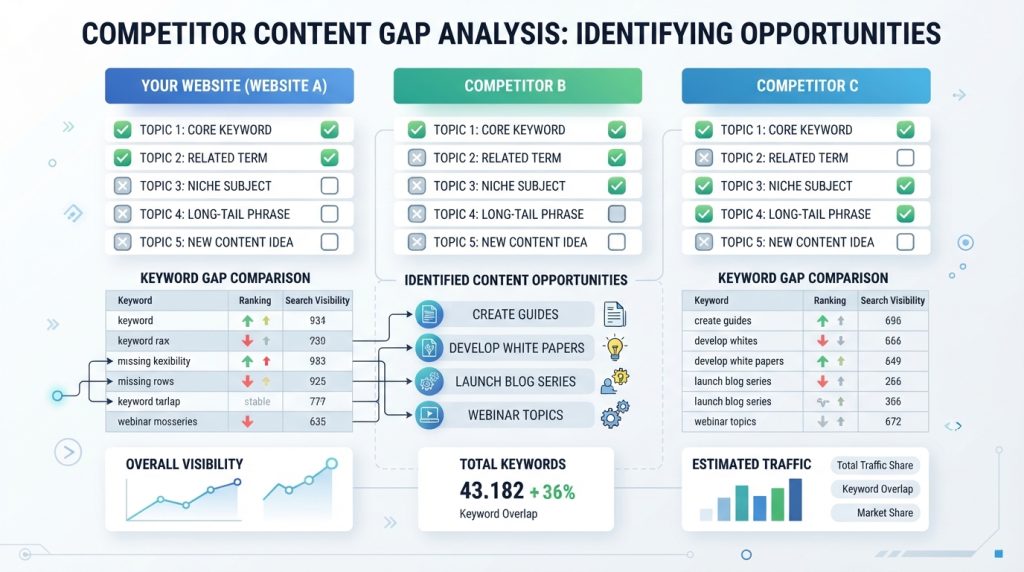
Steal market share by finding queries your competitors rank for that your domain completely misses. Run keyword gap reports comparing your site against top industry rivals.
Identify non-ranking queries where competitors hold top positions. Analyse competitor content structure, word counts, entity coverage, and schema deployment to spot structural gaps.
Look for weak spots like outdated statistics, missing media, or surface-level explanations.
Build superior content assets that fill those missing gaps with original research and clearer technical answers.
Expanding keyword coverage into competitor territory reclaims lost impressions and pulls qualified traffic to your converting pages.
Ongoing competitive auditing stops market share loss before organic traffic drops.
Strengthen E-E-A-T Signals
Before assigning top positions, Google considers experience, expertise, authority, and trustworthiness.
Generic, automated, or anonymous text is devalued. Attach verifiable author profiles with connections to publications, social media accounts, and outside credentials to foster confidence.
Incorporate direct expert opinion, screenshot evidence, practical testing, and original data into your articles.
Use Person and Organization Schema markup to enable automated credential parsing by search engines. Keep your website’s terms of service, editorial policies, and contact details up to date.
Search engines mark your content as inadequate quality if it lacks demonstrated expertise.
Maintain top rankings during core search improvements by demonstrating subject authority with explicit citations, schema, and verifiable facts.
Optimize On-Page Content Structure
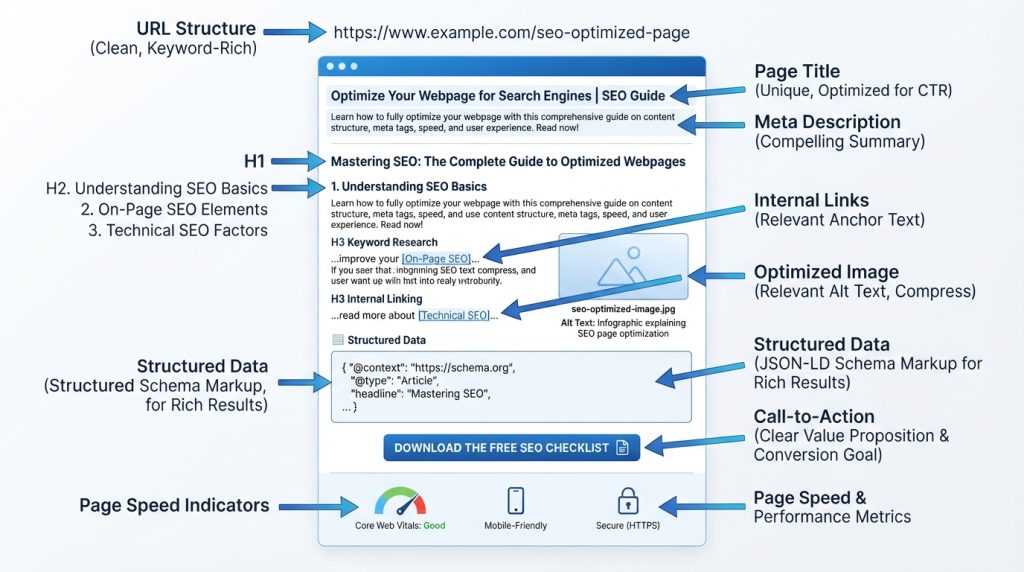
Both human readers and search engines want a tidy page layout. From H1 to H4, format pages using a rigorous header tag structure.
The title tag, meta description, H1, and first 100 words of prose should all contain the main keywords.
Write brief paragraphs, bulleted lists, and summary tables to avoid wall-of-text formatting. Use clear Schema JSON LD code to enable search engine crawlers to quickly index important data points.
To ensure quick page loads, reduce the size of images, provide precise measurements, and remove render-blocking scripts.
While enhancing essential web vitals, quick rendering and a clean style lower bounce rates.
Search engines may accurately scrape your page without spending crawl budget when you use clean markup.
Update and Revive Decaying Content
Static content loses search position over time as information ages. Run quarterly content audits to spot pages experiencing impression drops in the Search Console.
Target decaying pages with declining organic clicks and update outdated facts, broken links, and old media. Expand thin sections with current industry developments, updated technical steps, and fresh internal links. Refresh publication timestamps to signal recent updates.
To maintain link equity, consolidate two historical pages that serve the same purpose into a single standard guide and set up 301 redirects.
While producing quicker ranking recoveries across target searches, restoring existing assets uses fewer resources than creating new pages.
Improve Internal & External Linking Signals
Throughout the internet, hyperlinks convey PageRank authority and contextual significance. Create thoughtful internal links from pages with a lot of authority to items that are newer or have a lower ranking.
Instead of using generic click-here tags, use anchor text that matches exactly or phrases.
To support technical assertions, include external links to credible third-party research, scholarly articles, and official documents. Build broken links, provide technical resources, and use digital PR to obtain high–authority backlinks.
Steer clear of spammy directory links or harmful link networks that result in algorithmic penalties.
When paired with strategic internal linking, a clean external link profile raises target URLs in search results while shielding your website from domain penalty threats.
Optimize for AI Overviews & Generative Search
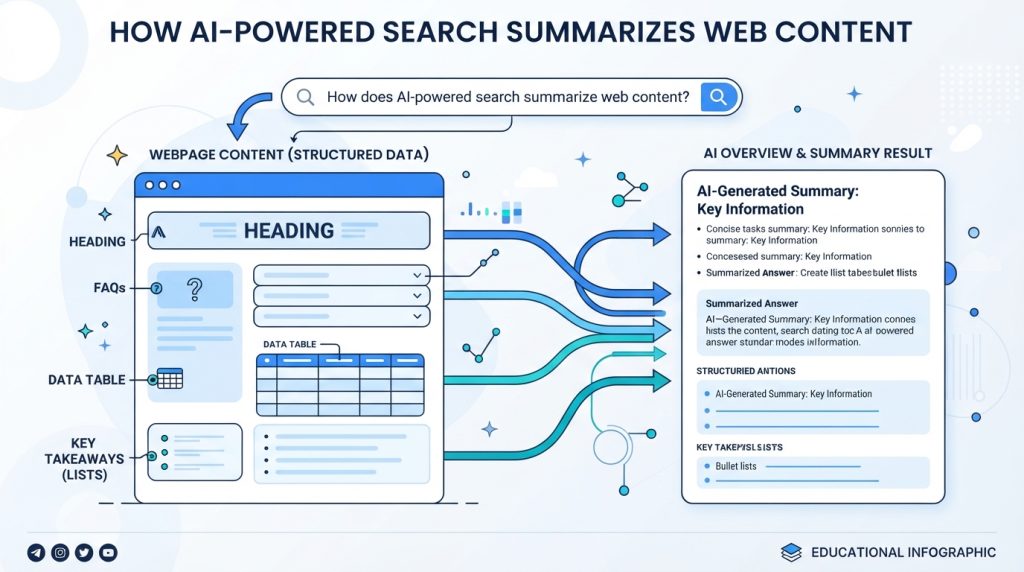
Generative search engines extract concise factual answers directly from web content. Capture AI Overviews by placing direct definition blocks at the beginning of key sections.
Format core data as clear entity attribute value triples that machine learning models parse easily.
Additionally, use numbered lists for sequential procedures and HTML tables for structured datasets.
Provide concise responses to target questions within forty to sixty words to optimise automated summary snippets.
Consistently exclude unnecessary verbosity, indirect metaphors, or ambiguous language that may hinder LLM indexing.
Structured content optimised for machine extraction ensures superior positioning in generative search summaries, thereby increasing high-intent organic traffic directly to your website.
Maintain a Consistent Publishing Schedule
Inconsistent publishing cadences undermine search engine crawl efficiency and impede the growth of domain authority.
Establish a stable content release schedule to incentivise search engine bots to perform regular crawls of your domain.
Develop editorial calendars well in advance to ensure a consistent volume of output across primary topic clusters.
Frequent indexation signals active site engagement, facilitating quicker ranking of new pages post-publication.
Please consider combining publishing velocity with thorough technical QA to help prevent index bloat issues.
Monitoring crawl frequency and indexation velocity through Search Console can assist in early detection of any crawling irregularities.
Maintaining a consistent production pace always supports domain momentum, offers an advantage over competing sites with slower update cycles, and helps ensure steady month-on-month growth in organic traffic.
Frequently Asked Questions
An SEO content strategy is your master plan for creating, publishing, and updating web pages to rank high on search engines.
It connects target search queries with real user needs, turning casual web searches into steady, valuable, organic site traffic.
Start by analysing search intent and mapping customer questions. Research low-competition keywords, organise pages into clear topic clusters, audit existing content, and write clear technical pieces.
Finally, build internal links and track ranking changes regularly in Google Search Console.
Without a structured plan, you publish articles that nobody ever finds.
A focused strategy attracts qualified leads, builds domain authority, cuts paid advertising costs, and delivers steady traffic that keeps growing even when you stop spending active daily ad money.
Core components include search intent research, long-tail keyword selection, structured topic clusters, clean on-page HTML markup, verified expert credentials, smart internal links, and routine content updates that keep your top search positions safe from active market competitor pressure.
It matches your site pages with exact search queries users type daily.
By structuring content cleanly, earning trust, and answering questions directly, search algorithms index your site higher, bringing steady flows of targeted visitors without running expensive paid ad campaigns.
Look past raw search volume and focus on user intent. Analyse competitor rankings, target low-competition long-tail phrases, and find queries where current top search results offer weak answers.
Choose terms that match your actual business services and products.
Content marketing covers all media creation across email, social channels, and branding.
An SEO content strategy focuses specifically on search engines, using technical page structure, keyword research, and intent matching to capture organic search traffic and boost domain search rankings.
Review your roadmap quarterly and adjust tactics whenever major search engine algorithm updates drop.
Monitor monthly traffic drops in Search Console to identify decaying pages early. Refresh published content regularly to maintain top rankings against aggressive organic search market competitors.
The biggest mistakes include chasing high-volume keywords without authority, ignoring search intent, publishing thin text without proof, and skipping internal links.
Creating random articles instead of organised topic clusters wastes budget and leaves your website buried on search pages.
Track organic impressions and clicks in Search Console alongside keyword position movement. Watch organic conversions, goal completions, and user dwell time in Analytics.
True success shows as steady organic traffic growth and increased revenue without relying on continuous paid ad spend.
Conclusion
Strict technological execution, deliberate search targeting, and ongoing page upgrades are necessary to build an organic engine.
American Design Hub assists companies in implementing content strategies that get top rankings instead of following conventional suggestions.
Measure actual income growth, correct page architecture, and concentrate on user intent.
By implementing these technical pillars now, you may dominate search engine rankings and see a steady increase in organic visitors.
Turn Your Content Into Organic Growth
A well-planned SEO Content Strategy helps your business improve search visibility, attract qualified organic traffic, and achieve sustainable growth through a data-driven approach.