
A few years ago, many dental clinics could grow mostly through referrals, local reputation, and word-of-mouth. A happy patient told a friend, who booked an appointment, and the clinic slowly grew. That still matters today, but it is no longer enough on its own.
Now, people search online before choosing almost anything, including a dentist. Someone with a toothache may grab their phone and search for an emergency dentist nearby.
A parent may look for a gentle dentist for their child. A person who wants a better smile may search for teeth whitening, veneers, Invisalign, or dental implants.
These people are not just reading for fun. Many of them are ready to call, ask questions, and book an appointment. This is where PPC dental marketing becomes powerful. It helps dentists appear in front of people at the exact moment they are looking for dental care.
Instead of waiting for patients to discover the clinic by chance, PPC helps dentists show up when the need is already there. That is one big reason it can bring more appointment requests.
What PPC Dental Marketing Means for Dental Clinics

PPC stands for pay-per-click. In simple words, it means a dental clinic runs an online ad and pays only when someone clicks that ad. These ads often appear at the top of search results when people look for dental services on Google.
For example, if someone searches “dentist near me” or “dental implants in my city,” they may see a paid ad from a nearby clinic. If the ad feels helpful, they click it. Then they land on a page where they can learn about the service, call the clinic, or fill out a booking form.
This is why dental PPC marketing is different from random advertising. The ad does not appear to everyone. It appears to people who are already searching for something related to dental care.
A good PPC campaign connects three things: the patient’s search, the clinic’s ad, and the landing page. When all three match, the patient has a smooth path from search to appointment.
Why PPC Helps Dentists Reach Patients Faster
One of the biggest benefits of paid ads is speed. Search engine optimization, or SEO, is very important, but it usually takes time. A dental website may need months to rank high in organic search results, especially in a busy city with many clinics.
PPC can create visibility much faster. When a campaign is set up well, a clinic can appear near the top of search results for important services. This is helpful for new practices, growing clinics, or dentists who want to promote a specific treatment.
Think about a patient searching “emergency dentist open today.” That person may not want to read ten websites; they want fast help. If a clinic appears clearly with a strong message, the patient may call within minutes.
PPC dental marketing works well because it reaches people with high intent. That means they already have a problem, need, or goal. The dentist is not pushing a message at the wrong time. The clinic is simply showing up when the patient is already looking.
How PPC Brings More Local Appointment Requests
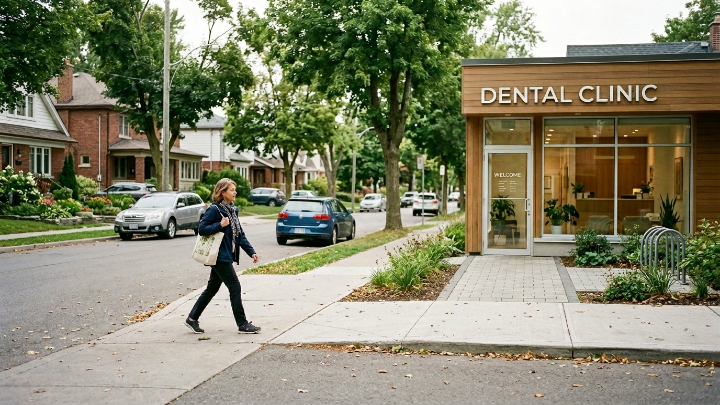
Most people do not want to travel far for a regular checkup, filling, cleaning, or emergency visit. They always prefer a clinic close to home, work, school, or their daily route.
With PPC, dentists can target specific areas. A clinic can show ads only in selected cities, neighborhoods, or nearby locations. This helps avoid wasting money on clicks from people who live too far away to become real patients.
Local searches also carry a strong intent to bring in more appointments. When someone types “dentist near me,” they usually want a nearby clinic, not a long educational article.
If the ad says the clinic offers same-day appointments, friendly care, or easy booking, the person has a clear reason to take action.
This is also useful for clinics with more than one location. Each location can have ads written for its own area. That makes the message feel more personal and more useful to the searcher.
In simple terms, local targeting helps dentists spend money where it matters most: on people who can actually visit the clinic.
Why PPC Attracts Better Leads, Not Just More Clicks
More website traffic sounds exciting, but traffic alone does not pay the bills. A dental clinic needs the right visitors, and it needs people who are likely to call, book, and show up.
That is where dental PPC marketing can be very helpful. It allows dentists to create ads for specific services. A person searching for teeth whitening can see an ad about whitening.
A person searching for implants can see an ad about implants. A person with pain can see an emergency dentistry ad.
This matters because different patients have different needs. Someone with a broken tooth needs a fast solution. Someone thinking about veneers may need trust, photos, and details. Someone comparing Invisalign options may want to know about comfort, cost, and treatment time.
When the ad matches the patient’s need, the click becomes more valuable. The patient feels understood, and the clinic has a better chance of turning that click into an appointment.
A strong landing page also helps. It should explain the service clearly, show trust signals, and make the next step simple. A clear phone number, short form, reviews, and a strong call-to-action can make a big difference.
How Tracking Makes PPC Easier to Improve

One reason dentists like PPC is that it can be measured. With traditional marketing, it can be hard to know what worked. A clinic may place an ad in a magazine or on a billboard, but tracking real appointment results can be unclear.
With PPC dental marketing, dentists can see useful numbers. They can track clicks, phone calls, form submissions, keyword performance, and cost per lead. This makes it easier to understand which ads are helping and which ones need improvement.
For example, one keyword may bring many calls, while another gets clicks but no bookings. A smart campaign does not keep wasting money on weak keywords. It adjusts. The budget can move toward the ads and services that bring better results.
Tracking also helps dentists understand patient behavior. If many people visit a page but do not call, the page may need some changes for a clearer message. If mobile users leave quickly, the page may be too slow or hard to use on a phone.
PPC is not something to set once and forget. The best campaigns improve over time. Small changes in headlines, offers, forms, or landing pages can lead to more appointment requests.
How PPC Builds Trust Before Patients Call

People can feel nervous about choosing a dentist. Some worry about pain. Some worry about cost. Some have had a bad experience in the past. Before they call, they want to feel safe and confident.
That is why trust is so important. A paid ad may get attention, but trust helps turn attention into action. The ad and landing page should show that the clinic is professional, friendly, and reliable.
Reviews are among the strongest trust-builders for new patients. When people see happy patients sharing good experiences, they feel more comfortable.
Clinic photos can also help because they make the practice feel real. Dentist credentials, before-and-after images, payment options, and clear service details can also reduce hesitation.
The message should be simple and direct. Phrases like “gentle dental care,” “same-day appointments available,” or “flexible payment options” can answer common concerns before the patient even asks.
This is where dental PPC marketing becomes more than just buying clicks. A well-built campaign guides the patient from worry to confidence. When people trust what they see, they are more likely to call.
Common PPC Mistakes Dentists Should Avoid
PPC can deliver great results, but only when handled carefully. If the campaign is rushed or poorly planned, it can waste money quickly. Many dental clinics struggle not because PPC does not work, but because the setup is weak.
Here are some common mistakes dentists should avoid:
- Sending every ad to the homepage instead of a focused service page
- Using broad keywords that attract people who are not ready to book
- Running ads without tracking calls, forms, or real appointment requests
- Writing weak calls-to-action that do not tell patients what to do next
- Using slow, confusing, or mobile-unfriendly landing pages
Each mistake creates friction. If a patient clicks on an implant ad but lands on a general homepage, they may leave. If the phone number is hard to find, they may choose another clinic. If no one tracks results, the clinic may keep paying for clicks that do not bring patients.
The good news is that these problems can be fixed. With better targeting, clearer pages, and proper tracking, PPC becomes easier to manage and improve.
How Dentists Can Make PPC Campaigns More Successful
A successful campaign starts with a clear goal. The clinic should know what it wants to promote. Is the goal more emergency appointments? More implant consultations? More cosmetic dentistry leads? Each goal needs its own message.
Location-based keywords are also important, and Phrases like “dentist in the city,” “emergency dentist near me,” or “cosmetic dentist in the area” help connect the clinic with nearby patients. These searches are often more useful than broad terms because they show local intent.
Separate campaigns can also improve results. Implants, whitening, Invisalign, emergency care, and pediatric dentistry should not all use the same ad. Each service needs its own focus because each patient has a different reason for searching.
Mobile experience matters a lot, and most of the patients often search on their phones, especially during urgent moments. The landing page should load fast, show the phone number clearly, and make booking easy. A simple click-to-call button can help turn a search into a real appointment.
Regular testing is another key part of success. PPC dental marketing performs better when ads, headlines, offers, and landing pages are tested and improved. Even small changes can make the campaign stronger over time.
Conclusion
Patients are already searching online for dental care every day. Some need help right away. Some are comparing options. Some are ready to improve their smile but need the right clinic to guide them.
PPC helps dentists meet these people at the right time. It gives clinics faster visibility, stronger local reach, better targeting, and clear tracking.
It also helps promote valuable services like implants, Invisalign, emergency dentistry, veneers, and teeth whitening.
The real power of dental PPC marketing is not just getting clicks. It is turning those clicks into calls, forms, consultations, and booked appointments.
When the ads are clear, the landing pages are helpful, and the tracking is set up properly, PPC can become one of the fastest ways for a dental clinic to grow.
Frequently Asked Questions
PPC dental marketing is a paid online advertising method where dentists pay when someone clicks their ad. These ads usually appear on platforms like Google, Bing, Facebook, or Instagram. For example, when someone searches “dentist near me” or “emergency dentist open today,” a dental clinic can show an ad and guide that person to a booking page or phone call.
PPC helps dentists reach people who are already searching for dental care. These people may need a cleaning, toothache treatment, teeth whitening, dental implants, or an emergency appointment. Since the ad appears at the right time, the clinic has a better chance of turning that search into a real appointment.
Yes, PPC advertising can be worth it for dental practices when it is planned and tracked properly. It can bring quick visibility, more local patient leads, and better promotion for high-value services. The key is to target the right keywords, use strong landing pages, and measure real results like calls, forms, and booked appointments.
PPC can start bringing traffic soon after the campaign goes live. Some dental practices may receive calls or form submissions within days, especially for urgent services like emergency dentistry. However, strong results usually improve over time as the ads, keywords, budget, and landing pages are tested and optimized.
Google Ads is often the best platform for dental PPC because people use Google when they are actively searching for a dentist. Bing Ads can also work well in some locations. Facebook and Instagram ads are useful for building awareness and promoting cosmetic services like teeth whitening, veneers, or Invisalign, but they usually target people earlier in the decision-making process.
The right PPC budget depends on the clinic’s location, competition, services, and growth goals. A dentist in a busy city may need a higher budget than a clinic in a smaller area. Many practices start with a moderate monthly budget, track results carefully, and then increase spending on campaigns that bring quality leads and booked appointments.
PPC often works well for services that people search for with clear intent. These include emergency dentistry, dental implants, Invisalign, veneers, teeth whitening, crowns, root canals, pediatric dentistry, and cosmetic dentistry. High-value services can be especially effective because one booked patient may bring a strong return on ad spend.
Dentists can improve PPC conversion rates by sending ads to focused landing pages, using clear calls-to-action, showing reviews, adding click-to-call buttons, and making forms simple. The landing page should match the ad. For example, an implant ad should lead to an implant page, not a general homepage.
Common PPC mistakes include targeting keywords that are too broad, sending all ads to the homepage, ignoring mobile users, not tracking phone calls, and using weak ad copy. Another major mistake is setting up a campaign and never improving it. PPC works best when it is reviewed, tested, and adjusted regularly.
The success of a dental PPC campaign should be measured by real patient actions, not just clicks. Important metrics include phone calls, form submissions, cost per lead, appointment bookings, conversion rate, and return on ad spend. A campaign is successful when it brings quality leads at a cost that makes sense for the practice.
Turn More Clicks Into Booked Dental Appointments
Getting more website visitors is only part of the process. What really matters is turning those visitors into booked appointments. With the right PPC marketing services, your dental practice can reach local patients at the exact moment they’re searching for care, helping you generate more qualified leads and increase appointment requests.