
Building a simple e-commerce PPC strategy in 2026 feels like trying to program a VCR while a robot vacuum tries to trip you. It is messy and fast. If you think clicking a few buttons in Google Ads still counts as a strategy, you are basically donating your margin to Mountain View.
Stop treating your ad account like a slot machine. The 2026 market demands surgical precision because AI bidding models now eat lazy data for breakfast.
You need to feed the machine high-quality signals, or it will starve your bank account. American Design Hub is here to strip away the noise and give you the hard-coded truth about winning the auction.
We are moving past basic keywords into an era of deep data integration where only the sharpest survive.
Simple E-commerce PPC Strategy for 2026 for Beginners
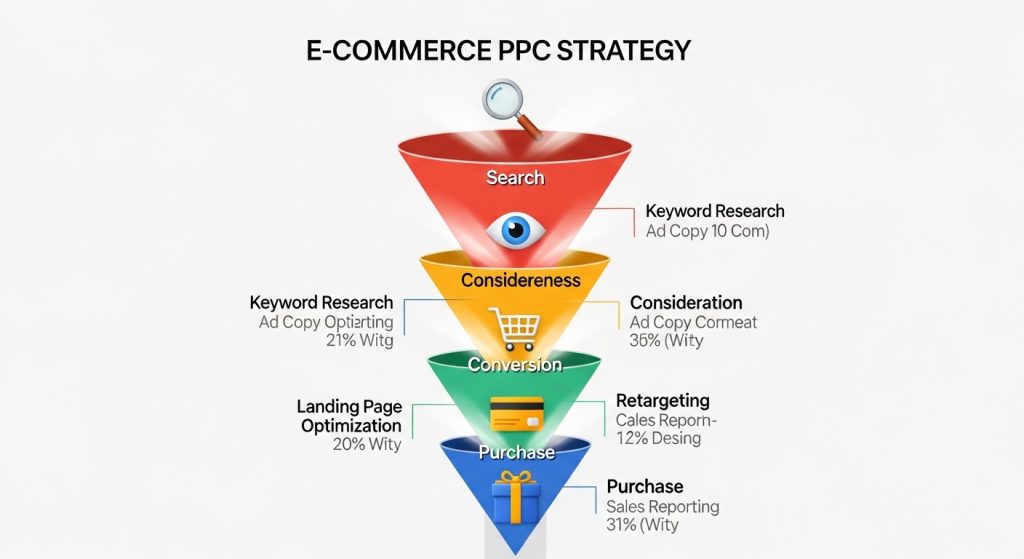
Beginners often fail because they try to mirror enterprise setups without the data volume to support them. In 2026, simplicity wins. Start by focusing on a single high-intent channel, such as Search or Shopping, rather than spreading a thin budget across five platforms.
Your foundation rests on clean tracking. If your conversion tags do not fire correctly, your campaign is dead on arrival. If you are starting, forget about manual bidding. Focus on providing the platform with clear product titles and high-resolution images.
Beginners must prioritize “Winning the Click” over “Getting the Impression.” High click-through rates signal to the algorithm that your ads are relevant. This lowers your cost per click over time. Build your first campaign around your top five best-selling products.
Do not test your entire catalog at once. Master the basics of offer resonance and landing page speed before you touch complex audience layering or remarketing scripts.
E-commerce PPC Strategy Goals and Success Metrics for 2026
Stop obsessing over ROAS. Return on Ad Spend is a vanity metric that ignores your COGS and shipping overhead. In 2026, savvy e-commerce PPC services focus on POAS (Profit on Ad Spend).
You must calculate the actual net profit generated after all expenses. Another critical metric is New Customer Acquisition Cost. If you spend your entire Budget retargeting existing fans, you are not growing. Track the ratio of new versus returning customers within your PPC dashboard.
Monitor Impression Share Loss due to Budget to see where you are leaving money on the table. Success in 2026 also looks at Customer Lifetime Value.
A high CAC is acceptable if customers return three times a year. Set hard ceilings for your CPA based on product margins.
Use these guardrails to quickly kill underperforming campaigns. Demand transparency from your data. If a metric does not lead to a business decision, stop tracking it.
Account Structure for E-commerce PPC Campaigns That Scales
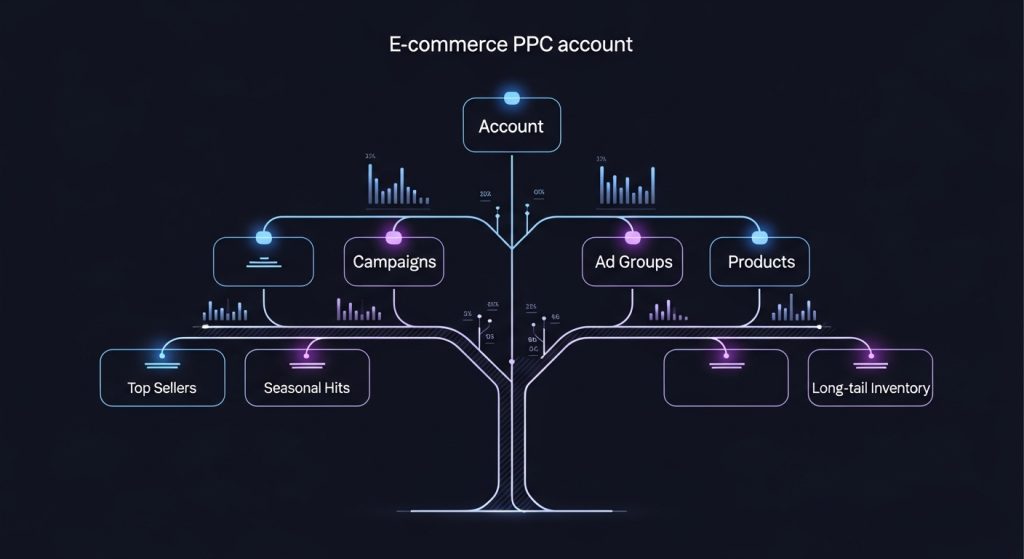
A messy account structure creates internal competition and wastes budget. Use a simplified structure that groups products by performance and margin. The “Hagakure” or “Modern Search” methods are standard now. Consolidate your data into fewer, larger campaigns to give the AI enough signals to learn.
Break your structure into three main buckets: Top Sellers, Seasonal Hits, and Long-tail Inventory.
Use Negative Keyword Lists at the account level to prevent your Shopping ads from triggering on irrelevant searches.
Avoid over-segmenting by device or location unless the data shows a significant performance discrepancy. Group similar products into Ad Groups with tight themes.
This ensures your ad copy aligns perfectly with user intent. A scalable structure allows you to increase spending without breaking the logic.
Keep your naming conventions strict to pull clean reports. If you cannot explain your structure to a peer in two minutes, it is too complex.
Keyword Research for Product Level Intent Using Search Query Data
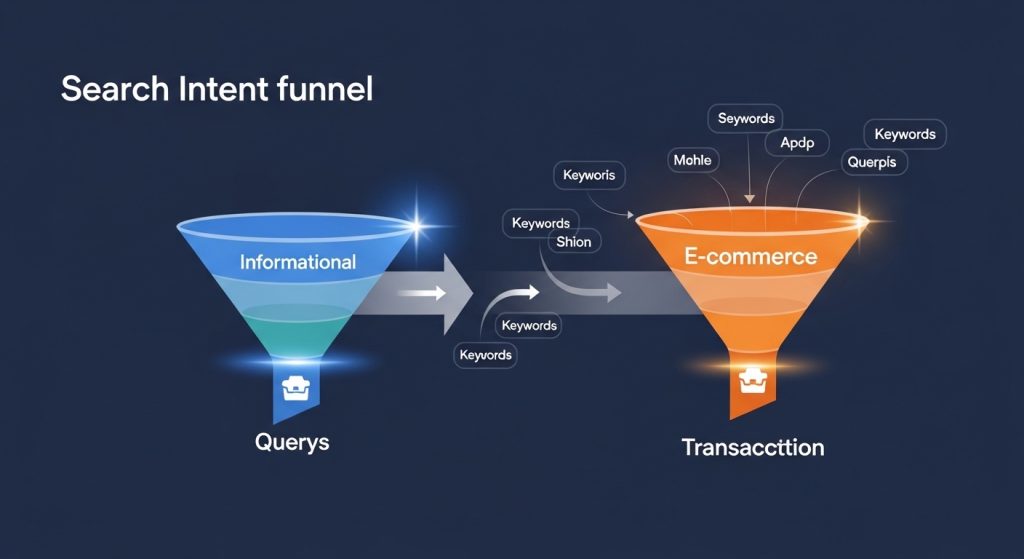
Keywords are no longer just strings of text. They are signals of specific intent. In 2026, stop using broad tools that give you generic volume estimates. Dive into your actual Search Query Reports to find out how people find your products. Look for “Problem-Solution” queries.
Instead of bidding on “running shoes,” target “carbon plate shoes for marathon recovery.” These long-tail phrases carry higher conversion intent. Map your keywords to specific funnel stages.
Use Exact Match for your highest-converting terms to maintain control over the bid. Broad Match is only for accounts with massive conversion data where the AI can be trusted.
Analyze “Near-Me” and “In-Stock” queries to capture local intent. Use scripts to automatically mine search queries and add them as negatives if they have zero conversions after a set number of clicks. This keeps your keyword list lean and mean.
Feed Driven Campaign Design for Shopping Ads in 2026
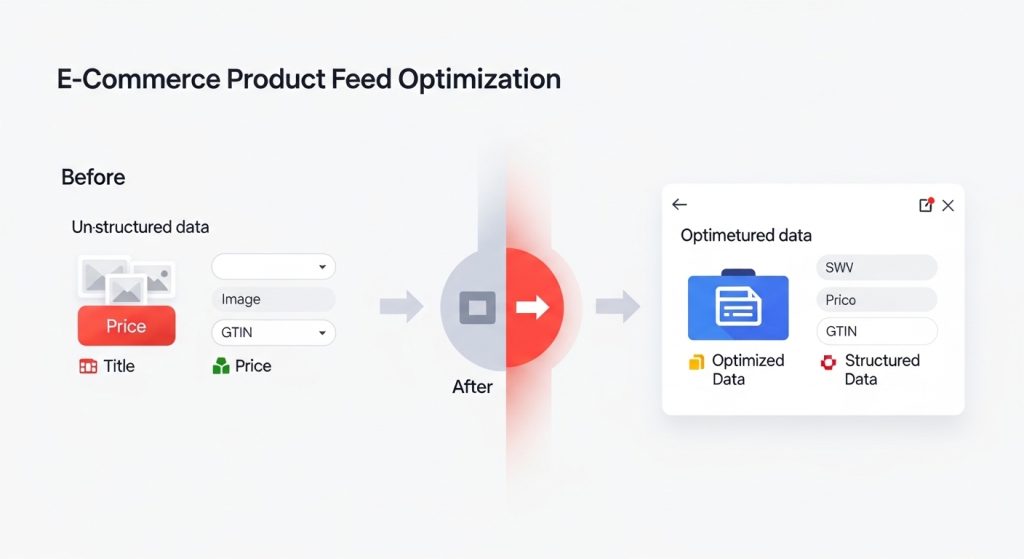
Your product feed is the heartbeat of your e-commerce PPC strategy. If your feed is garbage, your ads will be garbage.
Optimize your Product Titles by putting the most important information, like Brand, Material, and Size, at the very beginning.
The algorithm weighs the first 15 characters most heavily. Use high-quality, lifestyle imagery alongside standard white-background shots to stand out in the tab. Custom Labels are your best friend here.
Tag products by “High Margin,” “Low Stock,” or “Best Seller” to control bidding.
In 2026, feed-driven ads must include local inventory data if you have physical stores. Ensure your GTINs are accurate, or Google will suppress your reach.
A technical e-commerce PPC agency spends more time in the Merchant Center than the Ads interface. Audit your feed for errors daily. Small glitches in price or availability will get your account suspended or tank your Quality Score.
Landing Page Signals That Improve Quality Score and Conversion Rate
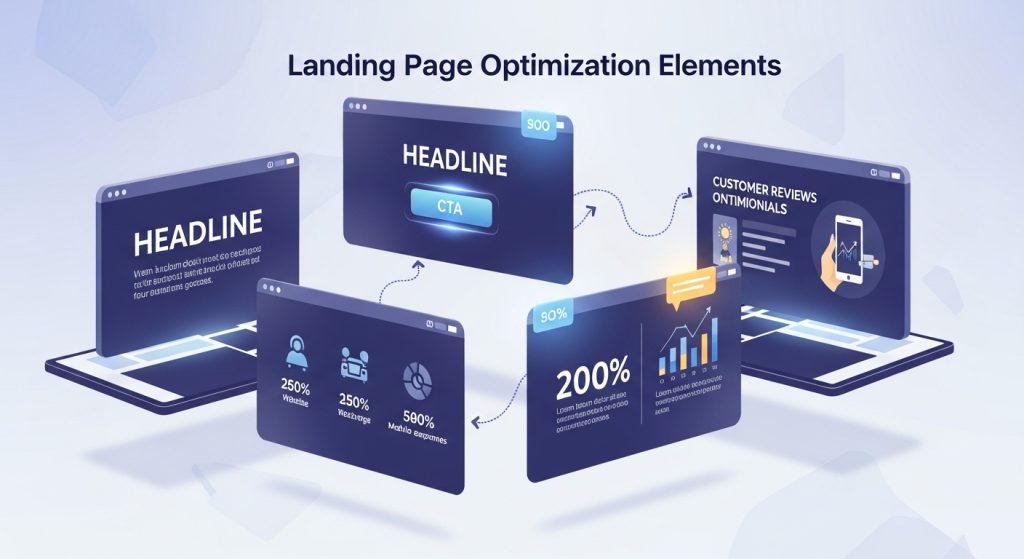
Sending paid traffic to a generic homepage is a crime against your budget. Your landing page must be a direct continuation of the ad’s promise. Speed is the first signal. If your page takes more than two seconds to load, you lose.
Use Core Web Vitals to measure your technical health. Ensure the H1 tag on your landing page matches the primary keyword of your ad group. This boosts your Quality Score and lowers your CPC. Mobile responsiveness is not an option.
It is the requirement. Use high-contrast “Add to Cart” buttons and remove navigation clutter that distracts from the purchase. Social proof, like star ratings and “Verified Buyer” badges, must be visible above the fold.
Technical buyers look for specifications and compatibility charts.
Provide this data clearly. High engagement rates on the page signal to the ad platform that your content is valuable, which improves your auction rank.
Bidding Strategy Selection for E-commerce Using First-Party Data
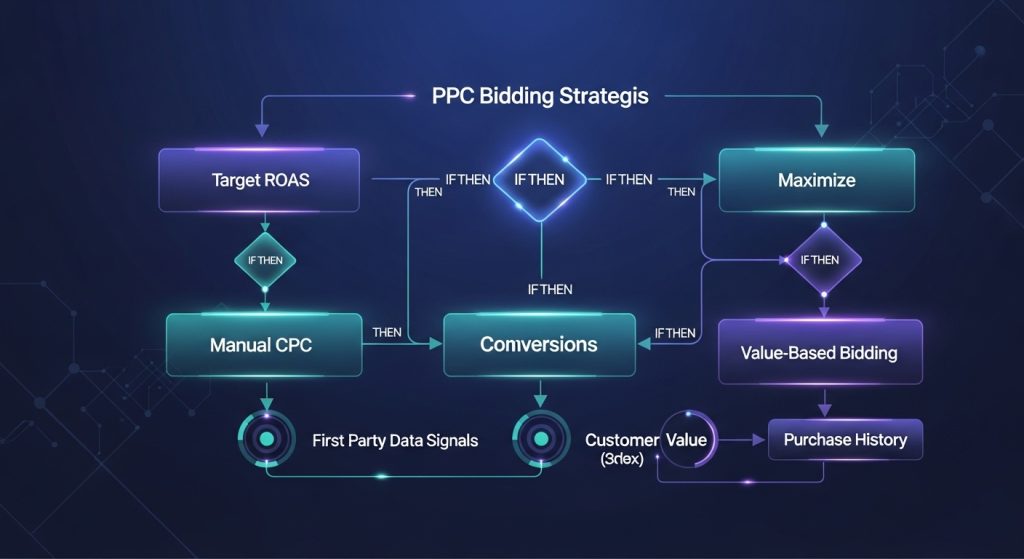
Manual bidding is a relic of the past. However, unquestioningly trusting Smart Bidding is equally dangerous. You must feed the algorithm first-party data to give it an edge.
Upload your customer lists and offline conversion data to train the model to identify your “Whale” customers. Use Target ROAS for established campaigns with steady data.
For new launches, use Maximize Conversions with a strict CPA cap to find the initial audience.
In 2026, the real pros use “Value-Based Bidding.” This tells the system to prioritize high-value orders over cheap ones. If you sell a $500 item and a $5 item, you do not want to pay the same CPA for both.
Adjust your bids based on the predicted user value.
Use seasonal adjustments during holidays to alert the AI to upcoming traffic spikes. Keep a close eye on your “Bid Strategy Status” to ensure you are not stuck in “Learning Mode” for too long.
Budget Allocation by Margin Product Category and Inventory Health
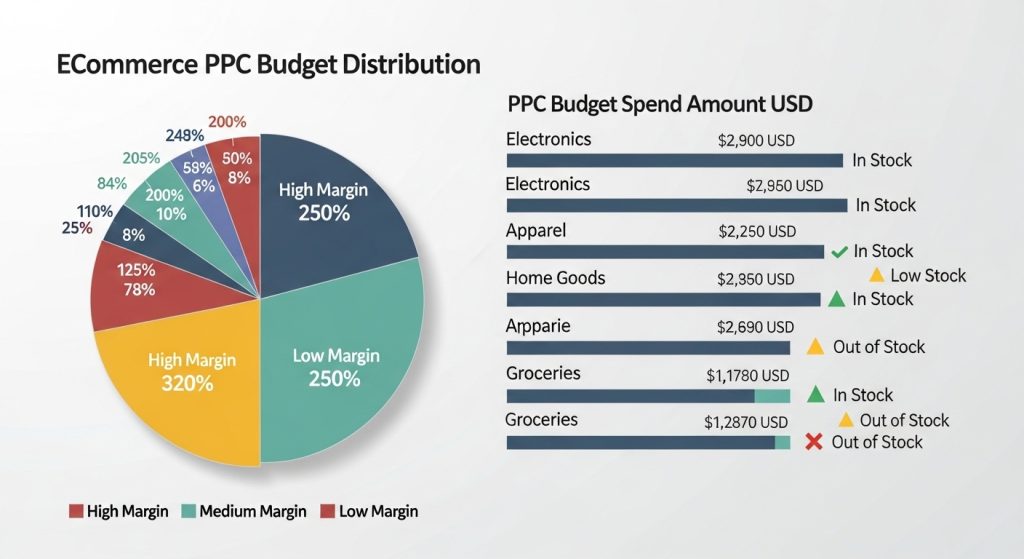
Do not give every product an equal slice of the pie. Allocate your budget based on business reality. High-margin products deserve the most aggressive spend. Use a “Tiered” budget approach. Tier 1 covers your “Hero” products that drive 80% of your revenue. Tier 2 is for testing new arrivals. Tier 3 is for clearing out old inventory.
Connect your PPC account to your inventory management system. If a product goes out of stock, your ads must pause instantly.
Spending money to send users to an “Out of Stock” page is a fast way to go broke. In 2026, you should also consider “Profitability Tiers.”
If shipping costs spike for a certain category, lower the PPC budget for those items. Move your money where it works hardest.
A static budget is a failing budget. Be ready to shift funds between campaigns daily based on real-time performance and inventory health.
Measurement Setup for E-commerce PPC with Attribution and Incrementality
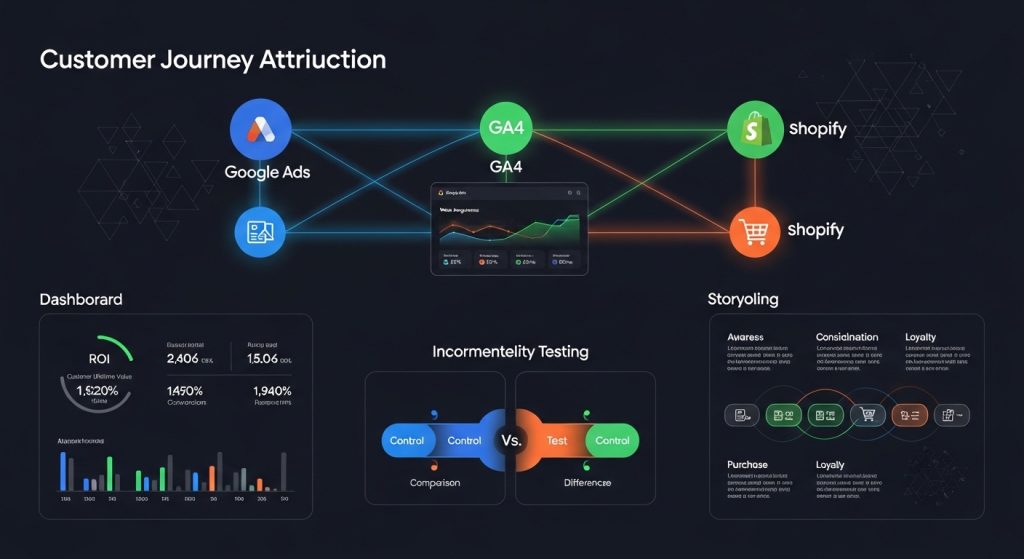
Last-click attribution is a lie. It ignores the five other touchpoints a customer had before buying. Use Data-Driven Attribution to understand the full journey. You must also run incrementality tests. This involves turning off ads in specific regions to see if organic sales fill the gap.
If your sales stay the same, your ads are “cannibalizing” organic traffic. In 2026, privacy regulations such as GDPR and CCPA make tracking more difficult.
Use Server-Side Tracking to bypass browser limitations and get cleaner data.
Implement Enhanced Conversions to recover lost signals. Build a dashboard that combines PPC data with your Shopify or warehouse data. This gives you a single source of truth.
If your ad platform shows you made $10,000, but your bank account shows $8,000, find the leak.
Measurement is not just about counting sales. It is about proving that your ad spend actually drove those sales.
Creative and Ad Copy Requirements for Technical but Human Buyer Intent
Stop writing ads for robots. Even technical buyers have emotions. Your ad copy must solve a problem or satisfy a desire immediately. Use “Feature-Benefit” logic. Do not just say “10,000 mAh Battery.” Say “Charge your phone for three days straight.”
Use dynamic keyword insertion sparingly. It can make ads look spammy. Focus on “Trust Signals” in your headlines, such as “Over 50,000 Units Sold” or “5-Year Warranty.”
In 2026, video assets will be mandatory even for Search campaigns through PMax. Your videos should be fast-paced and show the product in use within the first three seconds.
A/B test your calls to action. “Buy Now” might be too aggressive for a high-ticket item.
Try “View Technical Specs” instead. Ad copy must be direct and honest. Avoid “The Best” or “The Cheapest” unless you can prove it. Authenticity wins the click in a world flooded with AI-generated fluff.
Automation and Guardrails for 2026 with Smart Bidding and Monitoring
Automation is a powerful tool, but it needs a leash. Set up “Automated Rules” to protect your budget. Create a rule that pauses any campaign if the CPA doubles over 24 hours.
Set alerts for sudden drops in CTR or Impression Share. These are early warning signs of a technical glitch or a new competitor entering the auction.
Use scripts to check for 404 errors on your landing pages every hour. In 2026, the role of a PPC manager is more about “Prompt Engineering” and “System Monitoring” than manual button pushing.
Review your “Search Terms” weekly to ensure the AI has not gone off the rails and started bidding on junk. Smart Bidding is only as smart as the data you give it.
If you feed it bad signals, it will automate your bankruptcy. Stay in control by setting hard boundaries. Let the machine do the heavy lifting, but you must remain the architect of the strategy.
Frequently Asked Questions
Start by auditing your margins to set a realistic Target ROAS. Identify your “Hero” products and group them into structured campaigns. Sync a clean product feed to your merchant center for Shopping ads.
Choose platforms where your audience lives, then install server-side tracking to capture every conversion. Review data weekly to cut waste and scale winning products aggressively.
Focus on Google Shopping and Search ads for your top five best-sellers. Avoid spreading your budget thin across too many categories. Use “Maximize Conversions” with a cautious daily cap to let the algorithm learn without draining your bank account.
Prioritize high-intent keywords for users ready to buy immediately, rather than those browsing for information.
Calculate your break-even point first. Most beginners should start with $30 to $50 per day to gather enough data for the algorithm to optimize.
As you see a positive return on ad spend, reinvest a percentage of your profits back into the winning campaigns. Never spend more than you can afford to lose during the initial testing phase.
Google Ads remains the gold standard for capturing high-purchase intent through Shopping and Search. However, Meta is superior for visual discovery and interrupting users with products they didn’t know they wanted.
Use Google to satisfy existing demand and Meta to create new demand. Most successful brands eventually run a balanced mix of both for maximum reach.
Ignore vanity terms with high volume and low intent. Instead, use search query data to find long-tail “Product-Level” keywords, such as “waterproof leather hiking boots size 10.”
These specific terms cost less and convert at much higher rates. Use negative keyword lists to filter out “free,” “review,” or “repair” searches that waste your precious ad budget.
Sending paid traffic to a slow or cluttered homepage is a major failure. Other mistakes include ignoring negative keywords, failing to track “Add to Cart” events, and setting unrealistic ROAS targets.
Many sellers also “set it and forget it,” allowing the AI to bid on irrelevant terms that eat into margins. Constant monitoring keeps your campaigns lean and profitable.
Expect a “learning phase” of two to four weeks. During this time, the platform gathers data on user behavior and auction dynamics. You might see high costs and low conversions initially.
Stay patient. By the second month, you should have enough data to optimize bids and creative, resulting in a more stable, predictable sales performance.
Optimize your product titles with relevant keywords and use high-quality lifestyle imagery. Improve your landing page load speed and simplify the checkout process to reduce friction. Regularly test new ad copy and monitor your competitors’ offers.
Feeding the system with first-party customer data helps the AI identify higher-value shoppers, significantly boosting your overall account efficiency and profitability.
A healthy benchmark for e-commerce usually falls between 2% and 4%. However, this varies wildly by industry and price point. If you sell high-ticket luxury items, 1% might be excellent.
For low-cost impulse buys, you should aim for 5% or higher. Focus on improving your own baseline month over month rather than obsessing over generic industry averages.
Look beyond total revenue. Track Profit on Ad Spend (POAS) to ensure you are actually making money after COGS and shipping. Use a combination of platform-specific pixels and Google Analytics 4 to monitor the customer journey.
Analyze your New Customer Acquisition Cost to see if your spending is actually growing your brand or just recycling existing fans.
Conclusion
Winning the auction in 2026 requires a shift from manual tinkering to strategic data management. You must prioritize profit over vanity metrics and feed the machine high-quality signals to stay ahead of the competition. Stop wasting budget on broad intent and start optimizing every touchpoint from the feed to the checkout.
Build your system with clear guardrails, stay aggressive with your winning products, and let American Design Hub help you dominate.
Is Your Paid Advertising Actually Driving Profit?
Most e-commerce brands think their Paid Advertising is working because they see clicks and sales, but profit is what actually matters.
Behind the scenes, a lot of campaigns leak budget through poor structure, weak tracking, or wrong optimization signals.
We help businesses clean up and restructure their Paid Advertising so every dollar spent has a clear purpose and a clear return.
If you’re unsure whether your ads are truly performing, a quick expert review can often reveal what’s missing.
Book Your Free Consultation and let’s take a closer look at your Paid Advertising performance.