

Let’s Be Honest — Getting That First Customer Is the Hardest Part
Starting a business is one of the most exciting things you can do. You’ve got the idea, the passion, maybe even a logo and a website. But then comes the moment of truth: you open your doors (virtual or real), and… crickets.
You’re not alone. According to the U.S. Bureau of Labor Statistics, about 20% of new businesses in the USA don’t make it past their first year, and one of the top reasons is simply not finding enough customers early on. It’s not that the product or service is bad. It’s that people don’t know it exists yet.
Here’s the good news: landing your first 10 customers doesn’t require a massive marketing budget or years of experience. What it takes is strategy, consistency, and a willingness to put yourself out there. This guide walks you through exactly how to do that step by step, no fluff, no theory. Just real, actionable small business marketing tips that actually work.
The Step-by-Step Guide to Getting Your First 10 Customers
Step 1: Start With Who You Already Know

Your network is your first goldmine, and most people overlook it.
Tell your friends, family, former coworkers, college classmates, and neighbors what you’re doing. Send a personal message (not a mass broadcast) explaining what your business offers and how it could help them or someone they know.
Real example: Sarah launched a virtual bookkeeping service for small businesses. Before spending a dime on ads, she sent 30 personalized messages to former colleagues. Within two weeks, she landed 3 paying clients, all from people who already trusted her.
Tips to make this work:
- Be specific about what you offer and who it’s for
- Don’t be salesy, just be genuine and informative
- Ask directly: “Do you know anyone who could use this?”
- Follow up once if you don’t hear back, life gets busy
This is how to get first clients when you’re starting from scratch. It costs nothing, and trust is already built in.
Step 2: Show Up in Local Online Communities
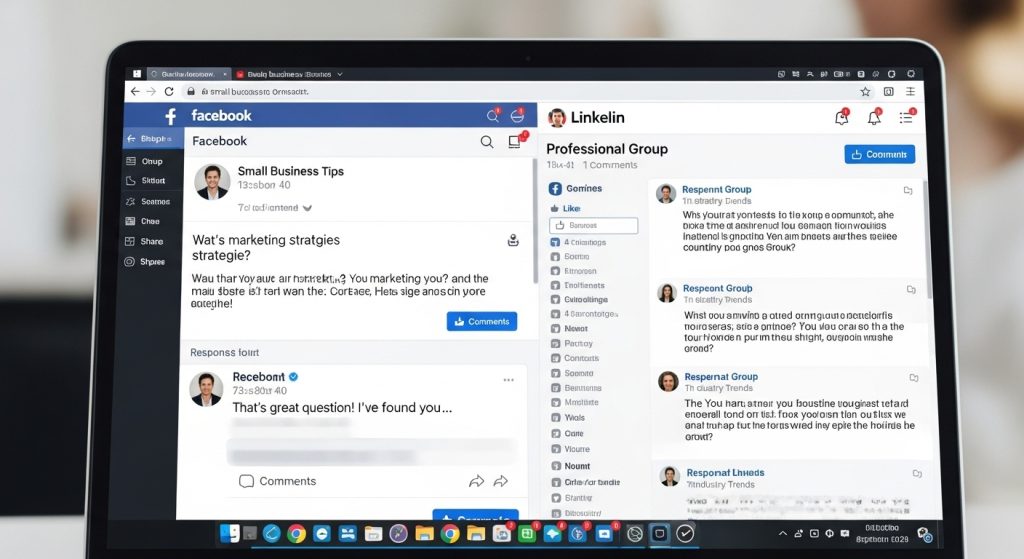
Facebook Groups, Nextdoor, Reddit local forums, and LinkedIn groups are full of your potential customers — and they’re free to join.
The trick is to show up as a helpful community member, not a pushy salesperson. Answer questions, share useful tips, and build genuine connections. Over time, people will naturally become curious about what you do.
For example, if you run a landscaping business in Austin, TX, join local homeowner Facebook groups and answer questions about lawn care. After a few weeks of being consistently helpful, you can mention your services naturally when relevant.
What works best:
- Answer 3–5 questions per week in your target community
- Add value before you ever mention your business
- Include a subtle mention of your business in your profile bio
- Post helpful content (tips, how-tos) that showcase your expertise
Step 3: Build a Simple, Professional Website
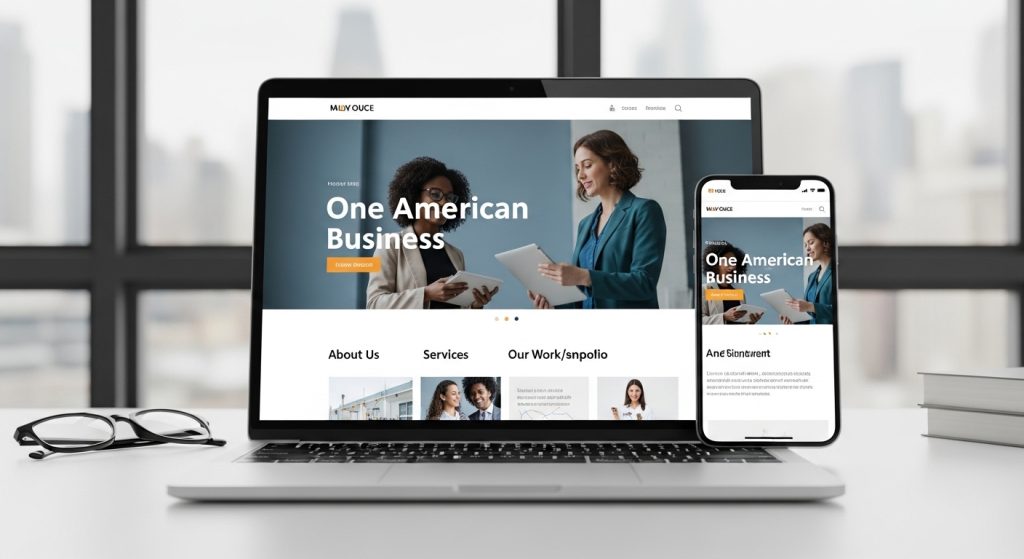
You don’t need a $10,000 website to look credible. But you do need something. A clean, simple one-page website or landing page can make or break a potential customer’s decision to reach out.
At minimum, your site should have your business name and what you do, who you serve, a few testimonials or examples (even early ones), contact info or a booking link, and ideally, a Google-friendly location mention (e.g., “small business accounting services in Chicago, IL”).
Platforms like Squarespace, Wix, or WordPress make it easy to get online fast. And once you’re live, you’re findable, which is how small businesses’ first customers in the USA are increasingly being discovered.
Pro tip: Add a clear call-to-action button like “Book a Free Consultation” or “Get a Quote Today.” People need to know what to do next.
Step 4: Offer a Limited-Time Deal or Free Trial
Nobody wants to be the first to try something new. Lower the risk by offering an irresistible introductory deal.
This isn’t about devaluing your work, it’s about building momentum and getting proof of concept.
Real-world examples:
- A new personal trainer offered a free first session to the first 5 people who signed up all 5 converted into monthly clients
- A freelance graphic designer offered 50% off the first logo project in exchange for a testimonial and referral
- A cleaning service gave a free first clean to 3 local households, then converted 2 into weekly recurring clients
Keep your offer time-limited (“this week only” or “first 5 clients”) to create urgency. And always ask for a review or referral as part of the deal.
Step 5: Set Up and Optimize Your Google Business Profile
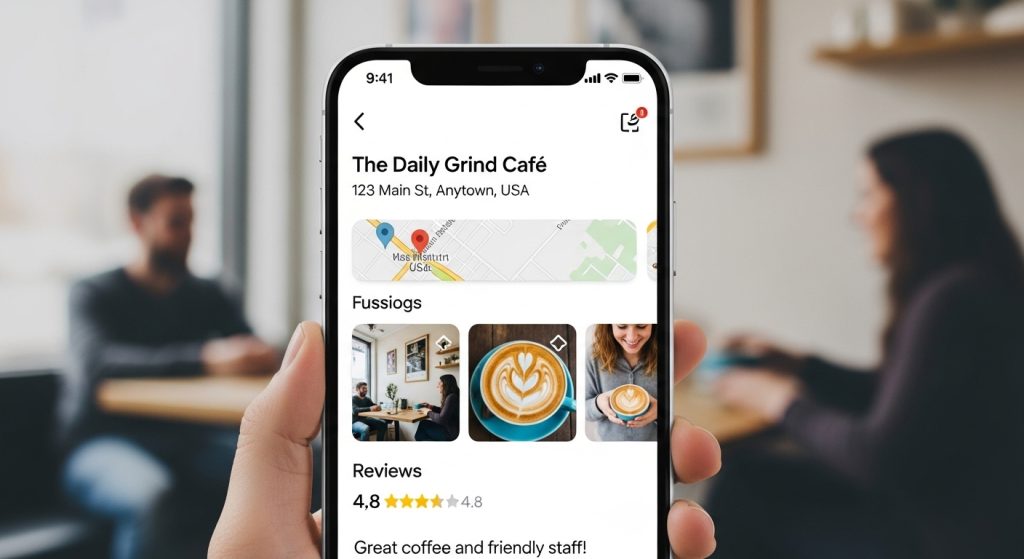
If your business serves a local area, Google Business Profile (formerly Google My Business) is one of the most powerful free tools available to you. It’s how people find you when they search “plumber near me” or “coffee shop in Denver.”
Setting it up takes about 30 minutes. Here’s what to focus on:
- Fill out every section completely name, address, phone, hours, website
- Add real photos of your work, products, or team
- Choose the right business categories
- Ask early customers to leave a Google review (even one 5-star review helps significantly)
- Post updates regularly to show you’re active
A fully optimized Google Business Profile can drive consistent local traffic to your business without spending a single dollar on ads. It’s one of the most underused small business marketing tips out there.
Step 6: Get Out There, Attend Local Events and Meetups
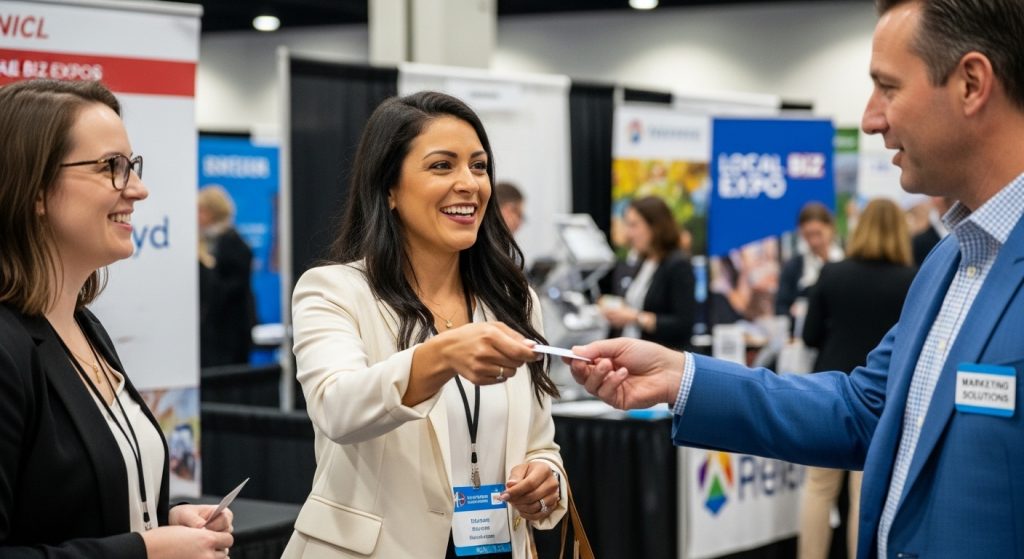
Yes, in-person networking still works. In fact, for many small business types, it works better than any digital strategy.
Look for local chamber of commerce events, business networking meetups on Meetup.com, industry trade shows or expos, community markets, pop-up events, and local charity or volunteer opportunities.
You don’t need to be the loudest person in the room. Just be present, listen, ask good questions, and hand out business cards. Even one strong connection from a local event can turn into 3–4 referrals.
Tip: Prepare a short, clear “elevator pitch” of one or two sentences describing what you do and who you help. Practice until it feels natural, not rehearsed.
Step 7: Ask for Testimonials and Referrals

Once you’ve helped your first few customers, don’t let that momentum die. This is where a lot of new business owners drop the ball. They deliver great work, and then… they never ask for anything in return.
After completing a job or delivering your product, reach out and ask:
- “Would you be willing to leave a quick Google review?”
- “Do you know anyone else who could benefit from what I do?”
- “Can I use your feedback as a testimonial on my website?”
Most happy customers are glad to help they just need to be asked. And word-of-mouth referrals are still the highest-converting form of marketing, especially for small businesses in the USA.
Even 2–3 honest testimonials on your website or Google profile can dramatically increase the number of people who reach out.
Step 8: Be Consistent, Track What Works, and Adjust
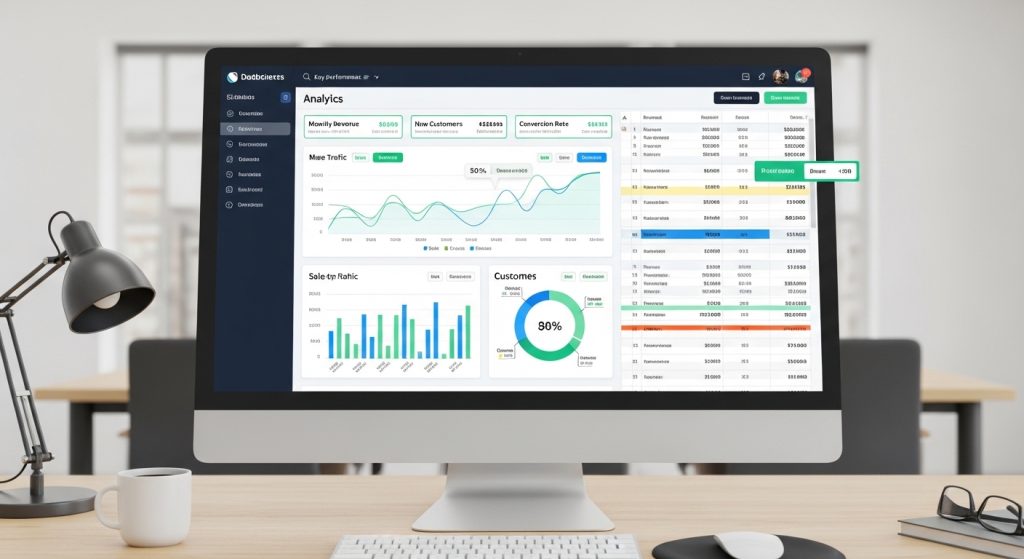
Getting your first 10 customers isn’t a one-week sprint. It’s a process, and the businesses that win are the ones that show up consistently, even when results are slow.
Each week, track things like: how many people you reached out to, how many responded, what your conversion rate is from inquiry to customer, and which marketing channel is bringing the most results.
Use free tools like Google Analytics for website traffic, a simple spreadsheet for outreach tracking, and Google Business Profile insights for local visibility data.
Then double down on what’s working. If Facebook Groups are generating more leads than email outreach, spend more time there. If your free trial offer is converting well, keep it running. Small pivots based on real data can have a huge impact on how quickly you get first clients.
Bonus: Common Mistakes to Avoid When Getting Your First Customers
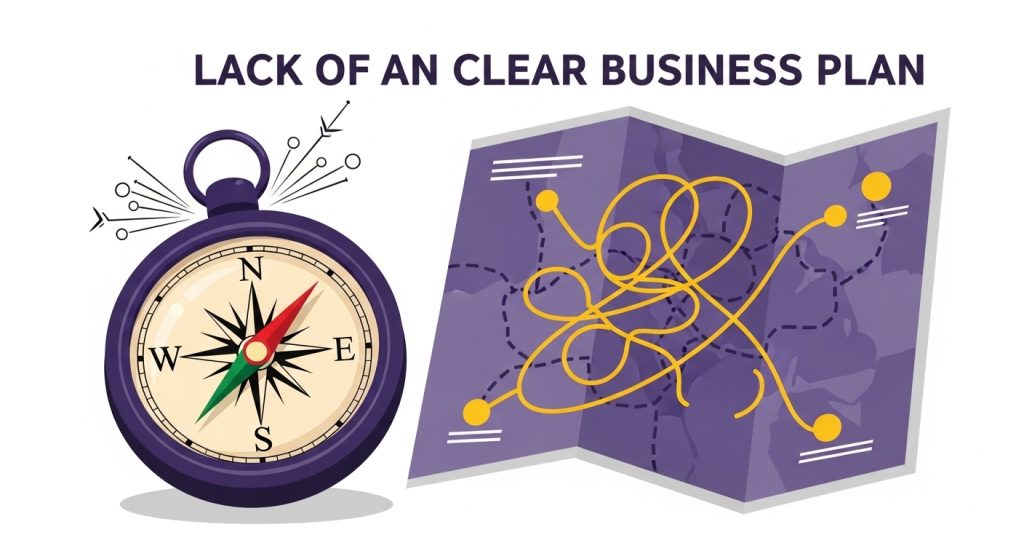
Even the most motivated new business owners can stumble on these. Avoid them, and you’ll get to 10 customers much faster.
1. Trying to Reach Everyone at Once
Narrowing your focus to a specific audience actually makes it easier to find customers, not harder. “I help busy moms in the Dallas area plan healthy meals” is far more compelling and findable than “I’m a nutrition coach.”
2. Waiting Until Everything Is Perfect
Your website doesn’t need to be perfect. Your offer doesn’t need to be fully polished. Get it to “good enough” and launch. You’ll learn more from real customer interactions than from planning in isolation.
3. Not Following Up
A lot of potential customers need 2–3 touchpoints before they’re ready to buy. If someone expressed interest and went quiet, it’s okay to follow up once or twice. Most people aren’t ignoring you, they’re just busy.
4. Underpricing Out of Insecurity
It’s tempting to price low to “just get someone to try you.” But underpricing can actually reduce trust and attract clients who aren’t a good fit. Offer an introductory deal with a clear deadline, not a permanent discount.
You’re Closer Than You Think
Here’s a quick recap of the 8 steps to get your first 10 customers as a small business owner in the USA:
- Leverage your existing network with personalized outreach
- Join and contribute to local online communities
- Build a simple, professional website to establish credibility
- Offer a time-limited deal or free trial to reduce buyer hesitation
- Set up and optimize your Google Business Profile for local search
- Network at local events, meetups, and trade shows
- Ask your early customers for testimonials and referrals
- Track your efforts consistently and double down on what works
Getting your first 10 customers takes effort, patience, and a willingness to put yourself out there. But every single successful business you admire started with step one a first customer who took a chance on something new. Your turn is now.
Conclusion: Your First 10 Customers Are Waiting for You
The hardest part isn’t building your product or service, it’s finding the courage to go out and tell people about it. But here’s the thing: your first 10 customers don’t just bring revenue. They bring testimonials, referrals, and the confidence to keep going.
The 8 steps in this guide are the same strategies small business owners across the USA use every day to get started — no big budget required, just consistent, intentional action.
Start with your network. Show up in your community. Ask for that first review. Do the work, then do it again tomorrow. The businesses that win aren’t always the ones with the best product, they’re the ones that refuse to quit during the slow, early days. Now go get your first customer.
Ready to Grow Your Small Business?
Getting your first customers is a big step, but building something that keeps growing matters even more.
If you feel like your business needs a better website, clearer branding, or just a simple way to start getting more customers, you don’t have to figure everything out on your own.
At American Design Hub, we work with small businesses across the USA to create clean, professional websites and practical strategies that actually help bring in real customers. No complicated process, just simple work that makes sense for your business.
Let’s Talk About Your Business
No pressure. No long commitments. Just a quick conversation to understand what you need and point you in the right direction.
👉 Book Your Free Consultation
📞 Call: +1 (888) 251-7552
📧 Email: info@americandesignhub.com
Frequently Asked Questions (FAQs)
There’s no universal answer it depends on your industry, pricing, and how actively you’re pursuing each step in this guide. Some business owners land their first 10 customers within 2–4 weeks by aggressively working their network and running a strong introductory offer. Others take 2–3 months, especially in higher-ticket service businesses where the sales cycle is longer. The key is not to equate slow progress with failure. Consistency over time always wins.
Absolutely not. Most of the strategies in this guide, leveraging your network, joining online communities, optimizing your Google Business Profile, and attending local events, cost nothing but time and effort. A simple website can be set up for as little as $10–$20 per month. Your first 10 customers are almost certainly reachable without paid ads. Once you have some revenue and testimonials, you can consider investing in paid marketing to accelerate growth.
Everyone has more of a network than they think. Former coworkers, classmates, neighbors, church or gym acquaintances, people you follow on LinkedIn, all count. Start there. And if your personal network genuinely feels thin, lean harder into online communities (Step 2) and local events (Step 6). You can build a network from scratch faster than ever before, especially through platforms like LinkedIn, Facebook Groups, and industry-specific forums.
Not entirely free but heavily discounted or “free in exchange for something” can work well. For example, offering a free first session in exchange for an honest testimonial, or delivering a project at cost in exchange for a case study you can put on your website. The goal isn’t to work for nothing, it’s to lower the risk for the customer while getting something of value (social proof, referrals, portfolio content) in return. Just make sure your offer has a clear end date so it doesn’t become your permanent pricing.
Extremely important and often underestimated. Studies show that over 90% of consumers read online reviews before making a purchase decision, and nearly 80% trust online reviews as much as personal recommendations. Even getting 3–5 genuine 5-star reviews on Google in your first few weeks can significantly increase the number of people who reach out. Make asking for reviews a standard part of your process after every positive customer interaction.
It depends on your audience and industry. As a general rule, Facebook and Nextdoor work well for local service businesses (plumbers, cleaners, landscapers, tutors). LinkedIn is ideal for B2B services, consultants, and professionals. Instagram works well for visual businesses like photography, food, fashion, or interior design. Rather than trying to be everywhere at once, pick one platform where your target customers are most active and master it before expanding.
First, don’t panic. Early-stage marketing often feels like shouting into a void before it suddenly starts working. Second, revisit the specifics: Are you targeting the right audience? Is your offer clear and compelling? Is your messaging speaking to a real pain point? Sometimes the issue isn’t effort, it’s positioning. Try talking directly to potential customers (even informally) and ask what they actually need and what would make them choose you. The insights you get from those conversations are more valuable than any marketing guide, including this one.
Generally, paid ads work best once you have three things in place: a proven offer (something people have already bought or signed up for), a working conversion path (a website or landing page that actually turns visitors into leads), and some social proof (reviews, testimonials, or case studies). Jumping into paid ads before these are in place is like pouring water into a leaky bucket. Focus on organic strategies first, validate your offer, then use paid advertising to amplify what’s already working.