

You’ve probably heard generative engine optimization thrown around, and maybe you smiled and nodded, but deep down, you were like, What the hell does that actually mean?
You’re not alone, because today I’m going to explain generative engine optimization or GEO, like you’re five years old. Let’s rewind a little bit. You used to ask Google a question, and then Google gave you 10 website results.
You clicked one, maybe two. You scrolled, you got annoyed, you went back, maybe you found your answer, but maybe you didn’t. And trying to get your website to rank higher on those 10 website results was search engine optimization.
But now the search is changing. So, when you ask ChatGPT or Perplexity or Google’s AI, you know, like what’s the best stroller for twins under $300, you don’t get a list, you get a generated answer. So, a neat little paragraph like a smart friend wrote it.
That smart friend is pulling bits and pieces from all over the internet, blogs, reviews, forums, product pages, comments, Reddit threads, and your content if you’re lucky.
What Counts as a Generative Engine?
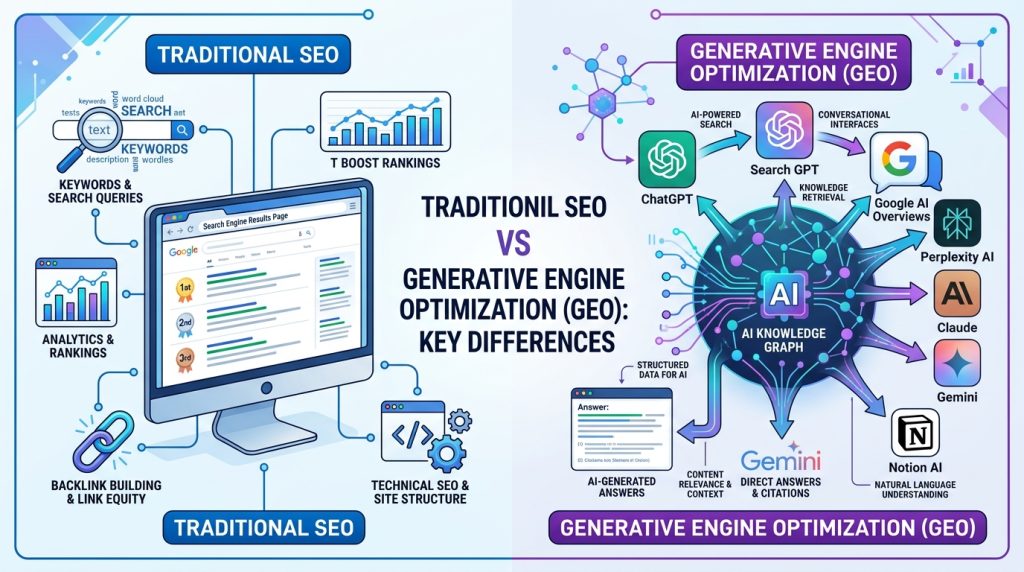
Let’s be clear, not every AI is the same. When we say generative engine, we’re talking about ChatGPT, especially their Search GPT, Google’s AI overviews, formerly SGE, Perplexity AI, Claude, Gemini, and even AI inside tools like Notion or Browsers with AI search built in.
Basically, if it gives you a written answer instead of a bunch of links, it counts. So, generative engine optimization is how you become the source for those answers. And you’re not trying to win the top link anymore.
If you’re trying to become part of the answer itself. And that means creating content that AI tools love to read, understand, and reuse. Not just keywords, but clear conversational answers to real questions people ask.
So, you want to think FAQs, how-to guides, product comparisons, real opinions and insights, and posts with factual value, not fluff. Whereas SEO is like saying put me on the stage, and GEO is like saying make me the script the speaker reads from. Now I totally know what you’re thinking.
Is SEO Finally Dead Now?
The answer is no. But the game has changed a little bit. So what’s still the same?
Well, you still need a fast, mobile-friendly site and meta descriptions, headers, and structures.
They’re all still important, and backlinks and authority, they still help. So, what’s
new? You now need content that answers full questions, not just keywords. AI
tools prefer content written in a clear human voice.
Being cited or summarized by AI matters more than a top 10 rank. And AI pulls review snippets, summaries, Reddit threads, not just your Homepage. So, behind the scenes, this is what happens when someone asks a generative engine a question.
How AI Builds Answers?
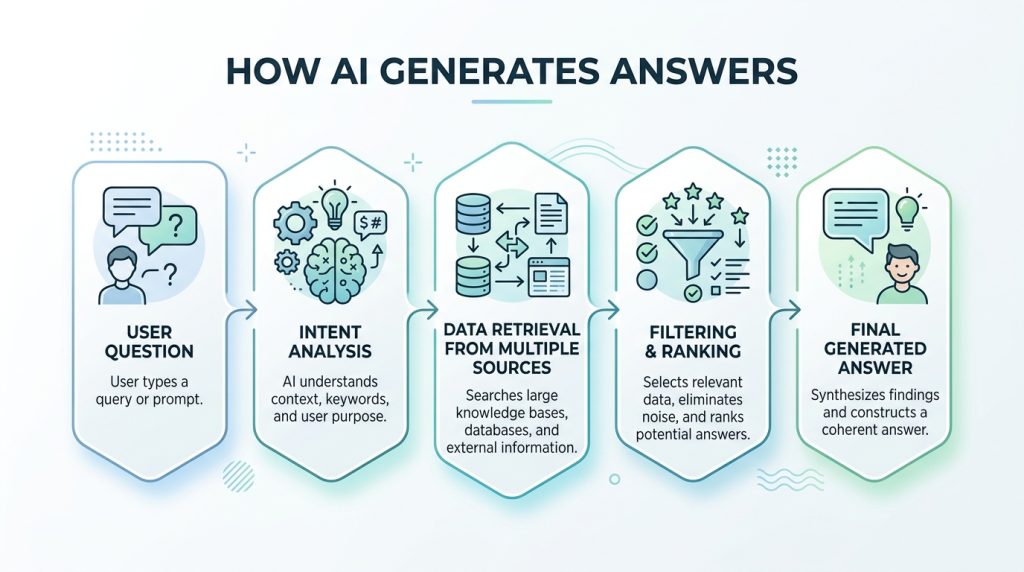
So, the AI breaks the question down into intent and subtopics. It finds and retrieves this info from its index. It ranks and filters that info based on relevance and trust. It comprises a full answer, and sometimes it cites sources, but sometimes it doesn’t.
The last part is kind of a big deal because what if you’re in the answer, but you’re not credited? And here’s something that freaks people out because you can show up in AI’s answer without a visible link.
So that means you might be summarized or quoted, but users won’t always know it came from you. And that’s why influence matters more than authorship now, because your goal isn’t just a backlink, it’s inclusion in the conversation.
How to Show Up in GEO?
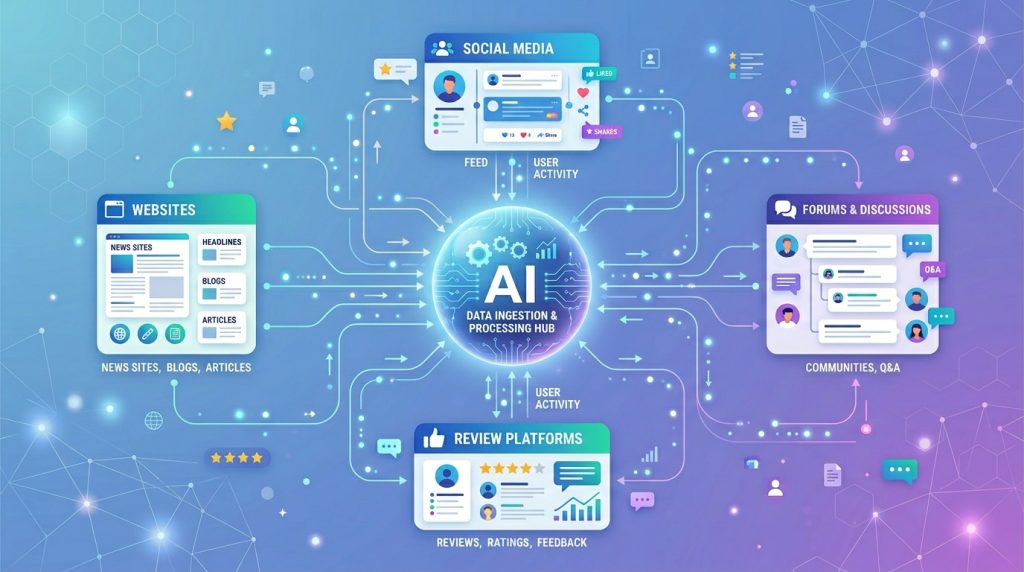
So a simple rule of thumb is if AI is pulling your insights, you’re winning. Even if it doesn’t tag you, where is AI pulling it from? So to show up in those answers, you need to be everywhere the AI is looking.
So that includes your:
- Website
- Google Reviews
- Trustpilot
- Yelp
- G2
Also Listicles like top 10 sushi restaurants or top 10 in your niche and forums like Reddit or Quora, Google business profile, Wikipedia, if possible, and social mentions and user-generated content.
if you’re only optimizing your blog posts, you’re missing half the game. What does that mean for SEO reporting and measurement? Here’s the part nobody’s ready for. Traffic might drop, and visibility might grow.
That’s because fewer people click, more people get the answer without leaving the AI, brand recall and trust become more important than raw clicks. Your website may not be the destination anymore, but your ideas are.
Local GEO Strategy
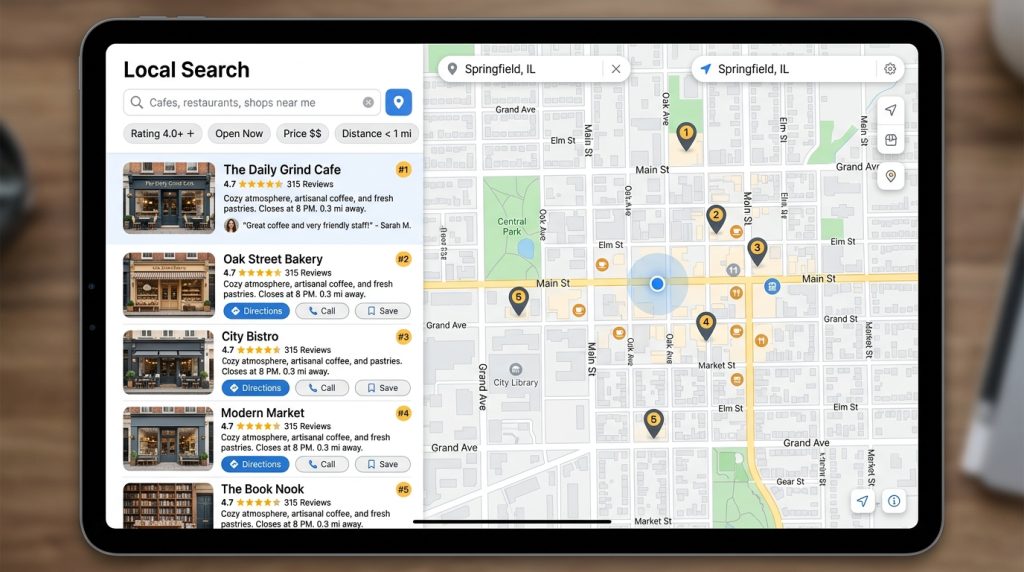
We’ve been talking about how AI pulls answers from across the internet, but what about local businesses?. If someone asked ChatGPT or Gemini, like the best pizza place near me or an affordable plumber in Dallas that works weekends, AI isn’t just guessing, it’s scanning local signals.
Here’s what matters most in local GEO:
Google Business Profile
It’s still critical when AI engines scrape info from your listing. So that’s like your reviews, your hours, your services, your photos, even the Q&As on there. And you want to keep it up to date and make it insanely clear what you do and who you help.
Online reviews volume
AI looks at review volume, sentiment, and recency across platforms like Google, Yelp, Trustpilot, and Facebook. So you want to ask for reviews often, respond to them, and it all sends trust signals that AI understands.
Local list mentions
So this one’s overlooked but powerful. If you want to show up in answers like who’s the best pest control company in Chicago, you need to be in listicles like top five pest control companies in Chicago, because even small blogs or regional publications help get featured or build your own content that compares top options and includes you.
Local authority and consistency
Make sure your business info is consistent everywhere, like your name, address, and phone number, or your NAP data, your categories and keywords, website links, and services offered. If AI encounters messy, conflicting information, it may skip you.
The bottom line here is that local GEO isn’t traditional local SEO. It’s about looking good across every place the AI pulls from and making it easy for the machine to say this business is trusted, active, and exactly what the user is looking for right here, right now.
If you help local businesses, this part’s important because with Vendasta, agencies like yours are reselling local SEO and AI employees that do things like keep business listings up to date, respond to reviews instantly, and even ask happy customers for new reviews automatically.
Important Action Steps for GEO
This demo walked you through exactly how AI employees work, what your clients will see, and how they deliver results from day one. And now that you understand how GEO works.
Here’s what you need to do.
If you want to get listed in high authority listicles in your niche. You want to build consistent reviews across Google, Trustpilot, or G2. Audit your brand visibility. Ask ChatGPT or Perplexity what it knows about you.
Add structured data like FAQs, reviews, and local schema to key pages. You want to match full question intent across your content, not just keywords. You should keep your site clean with lightweight HTML and limit the JavaScript.
And you want to keep ranking on Google and Bing because AI still pulls data from them and you should monitor your presence by prompting AI tools and tracking where you show up.
Now, people have been saying SEO is dead for like 20 years. And every time something new comes along, like Google ads, social media, featured snippets, ChatGPT or generative AI in search results, someone declares it over.
But the truth is, 15% of searches on Google are brand new. Search volume grows every year. Billions of searches happen every single day. And SEO is still an over $100 billion industry.
So search isn’t going anywhere. But how people search and how answers get delivered now that is changing. If you’re still chasing blue links, you’re playing an old game. But if you’re learning how to show up inside AI-generated answers, you’re ahead.
GEO isn’t the death of SEO. It’s just the next version.