
You’ve spent 20 minutes crafting the perfect tweet. The hook is sharp, the message is clear, and you’re confident it’ll resonate with your audience. You hit post, wait for the notifications to roll in… and nothing happens. Five likes. Two impressions. Crickets.
Sound familiar?
Here’s the truth: timing can make or break your content on X (formerly Twitter). Even the best tweets get buried when your audience isn’t scrolling. The X algorithm prioritizes fresh, engaging content, which means your tweet has a narrow window to catch fire before it disappears into the void.
In this guide, you’ll learn the best posting times for every single day of the week, why timing matters so much on X, and how to find your account’s unique sweet spot. Whether you’re a creator building your personal brand, a business promoting products, or a marketer managing multiple accounts, this guide will help you maximize your reach and engagement in 2026.

Why Posting Time Matters on X (Twitter)
X moves faster than almost any other social platform. While Instagram posts can gain traction over days and TikTok videos can go viral weeks after posting, X content has a much shorter lifespan. Most tweets see the majority of their engagement within the first hour.
The X algorithm in 2026 prioritizes recency and early engagement signals. When you post, the platform shows your tweet to a small portion of your followers first. If those people engage quickly through likes, retweets, replies, or bookmarks, the algorithm interprets this as a quality signal and pushes your content to more users.
This is why timing is critical. Post when your audience is asleep or busy, and your tweet gets minimal first-hour engagement. The algorithm sees this as a signal that your content isn’t resonating, and it stops showing it to more people. Post when your followers are actively scrolling, and you create momentum that can carry your tweet much further.
Here’s why timing directly affects your reach:
- The first 15-60 minutes determine the algorithmic distribution
- X users scroll quickly and rarely look back at older content
- Peak activity hours mean more eyes and faster engagement
- Time zones matter significantly for global audiences
- Competition for attention is highest during off-peak hours
Understanding these dynamics helps you work with the algorithm instead of against it.
Best Overall Time to Post on X
While every account is different, research and data from 2025-2026 show some consistent patterns. The sweet spot for most accounts falls between 9 AM and 3 PM on weekdays, with particular strength around 12 PM to 1 PM when people check X during lunch breaks.
Morning hours between 8 AM and 10 AM also perform well as people start their workday and scroll through their feeds with coffee in hand. Evening posting (7 PM to 9 PM) can work, but you’re competing with entertainment and relaxation mode when people are less likely to engage deeply with professional or business content.
Weekdays consistently outperform weekends for business and B2B content. This makes sense because X has become a platform where professionals network, share industry insights, and stay informed. On weekends, usage drops and shifts toward more casual, entertainment-focused content.
X behaves differently from Instagram and TikTok because it serves different user needs. Instagram users browse leisurely at various times throughout the day. TikTok users binge content in extended sessions. X users check in frequently for quick updates, making consistent posting during active hours more valuable than trying to find one “perfect” time.
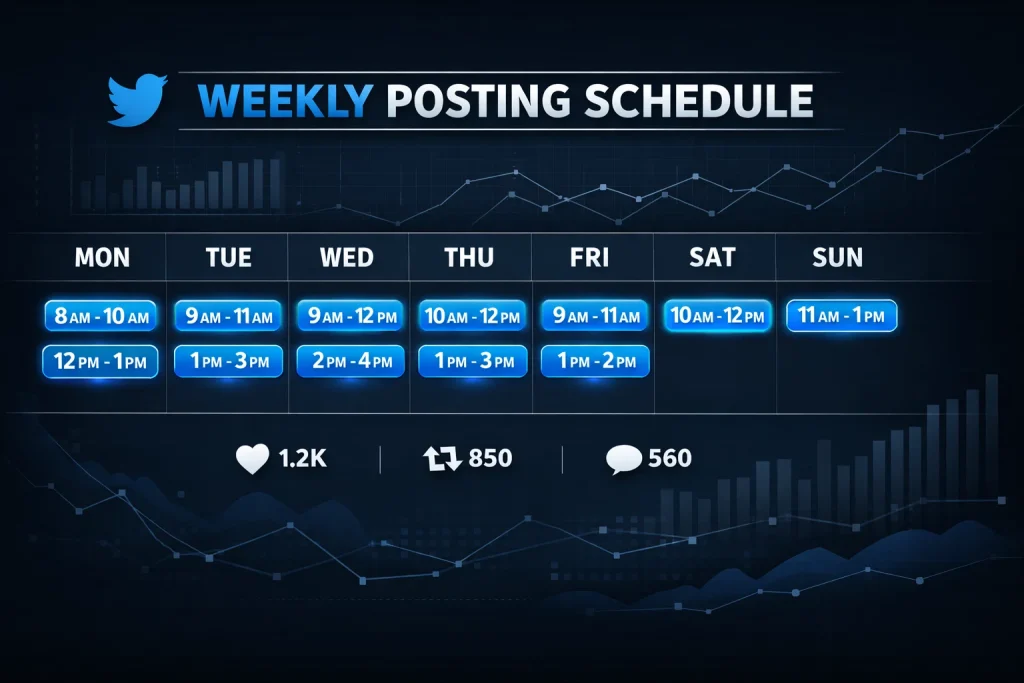
X (Twitter) Posting Times for Every Day
Let’s break down the best posting windows for each day of the week, so you can build a strategic schedule that maximizes your visibility.
Monday
Best times: 8 AM – 10 AM and 12 PM – 1 PM
Monday mornings see high X activity as people catch up on news and industry updates after the weekend. The lunch hour spike is particularly strong as professionals take breaks and scroll through their feeds.
Why it works: Fresh week energy means people are actively looking for content, insights, and conversations to engage with.
Quick tip: Post motivational or productivity-focused content early, then share valuable insights at lunch.
Tuesday
Best times: 9 AM – 11 AM and 1 PM – 3 PM
Tuesday is often called the best day to post on X, and data supports this. People are settled into their work week but not yet burned out, making them more receptive to engaging with content.
Why it works: High focus and productivity levels translate to more thoughtful engagement with quality content.
Quick tip: This is your day for important announcements, thought leadership threads, or content you want maximum visibility on.
Wednesday
Best times: 9 AM – 12 PM and 2 PM – 4 PM
Midweek sees sustained engagement throughout working hours. Wednesday users are less rushed than on Monday and more energized than on Thursday.
Why it works: Balanced energy levels mean consistent engagement across multiple time slots.
Quick tip: Test longer-form content like threads on Wednesday when people have attention to spare.
Thursday
Best times: 10 AM – 12 PM and 1 PM – 3 PM
Thursday maintains solid engagement, but users start shifting mentally toward the weekend. Morning and early afternoon remain strong.
Why it works: People who wrap up weekly tasks are more open to lighter, engaging content.
Quick tip: Mix educational content with entertainment value to match the transitioning mood.
Friday
Best times: 9 AM – 11 AM and 1 PM – 2 PM
Friday engagement drops earlier in the afternoon as people mentally check out for the weekend. Focus on morning and early lunch posting.
Why it works: Early-day energy is still high before the weekend mindset kicks in.
Quick tip: Post your most casual, fun, or community-building content on Friday afternoons.
Saturday
Best times: 10 AM – 12 PM
Weekend X usage skews later and more casual. Saturday mornings catch people leisurely scrolling, but overall volume is lower.
Why it works: Less competition means quality content can stand out to the active weekend audience.
Quick tip: Focus on lifestyle, entertainment, or behind-the-scenes content rather than business-heavy posts.
Sunday
Best times: 11 AM – 1 PM
Sunday sees the lowest overall engagement of the week. Users are preparing for Monday or spending time away from screens.
Why it works: The smaller but dedicated Sunday audience is highly engaged when they do show up.
Quick tip: Share inspirational content, weekly roundups, or preview what’s coming in the week ahead.
X vs Other Social Media Platforms
Copying your Instagram or TikTok posting schedule to X is a recipe for disappointing results. Each platform has unique user behavior patterns that demand different strategies.
Instagram users browse in longer sessions, often scrolling through days of content. TikTok’s “For You” page can surface older videos to new audiences indefinitely. X content, however, decays rapidly. A tweet posted six hours ago is ancient history.
This fast-moving nature means consistency matters more than perfect timing. Posting three times a day at decent hours will outperform one perfectly timed post per day. The algorithm rewards accounts that show up regularly and generate consistent engagement.
For businesses and creators serious about growth, working with Social Media Marketing Services that understand X’s unique dynamics can make a significant difference. Professional services help you maintain posting consistency, optimize timing based on your specific audience data, and scale your presence without burning out.
Best Time to Post on X by Content Type
Different content formats perform best at different times because user behavior changes throughout the day.
Text tweets work well during peak scrolling hours (9 AM – 3 PM) when people are actively looking for quick insights and updates. These are your fastest consumption content.
Threads need more attention and perform best during morning hours (8 AM – 11 AM) or early afternoon (1 PM – 2 PM) when people have mental bandwidth for deeper reading.
Images catch scrolling eyes effectively during any peak hour, but see particularly strong engagement during lunch (12 PM – 1 PM) when people want visual breaks from work.
Videos require the most attention investment and perform strongest during evening hours (6 PM – 8 PM) when users have time to watch, or during lunch breaks when people seek entertainment.
Polls engage users who have a moment to interact, making them perfect for mid-morning (10 AM – 11 AM) or early afternoon (2 PM – 3 PM) posting.
Promotional content should be posted during peak engagement windows (9 AM – 12 PM on Tuesday or Wednesday) but always balanced with value-driven content. A good rule is one promotional tweet for every four value-focused posts.
How to Find Your Own Best X Posting Time
Generic advice is helpful, but your unique audience might behave differently. Here’s how to discover your account’s optimal posting schedule.
Start with X Analytics, which is free for all accounts. Navigate to your analytics dashboard and look at the “Tweets” tab. This shows when your tweets received the most impressions and engagement over the past 28 days.
Pay attention to patterns rather than individual outliers. One viral tweet at 3 AM doesn’t mean that’s your optimal posting time. Look for consistent engagement clusters across multiple weeks.
Test different time slots systematically. For two weeks, post at 9 AM. For the next two weeks, try 12 PM. Compare engagement rates, not just total numbers (your follower count might be growing, so percentages matter more).
Track these key metrics: engagement rate, retweets, replies, and profile clicks. High impressions with low engagement mean you’re posting when people scroll but don’t have time to interact. Lower impressions with higher engagement might indicate a smaller but more dedicated audience window.
Refine your schedule quarterly as your audience evolves. What worked in January might not work in April as your follower demographics shift or platform usage patterns change.
Common X Posting Mistakes to Avoid
Even with perfect timing, certain mistakes will tank your engagement. Here are the most common pitfalls.
Random, inconsistent posting confuses the algorithm and your audience. If you post five times one day and then disappear for three days, the algorithm deprioritizes your content because it can’t predict when you’ll be active.
Ignoring analytics means you’re flying blind. Your actual performance data is more valuable than any general guide, but many creators never look at their numbers.
Overposting during the same hour creates competition between your own tweets. Space posts at least 2-3 hours apart so each piece of content gets its moment.
Only promoting without providing value trains your audience to scroll past your content. Build trust with helpful, entertaining, or insightful posts before asking for anything.
Posting without engagement follow-up wastes your content’s potential. The first 30 minutes after posting should be spent replying to comments and engaging with others to boost your tweet’s momentum.
Tips to Boost Engagement Beyond Timing
- Perfect timing opens the door, but quality content and engagement tactics are what actually drive growth.
- Write scroll-stopping hooks that create curiosity or emotional response in the first line. Your opening sentence competes with hundreds of other tweets for attention. Make it count.
- Ask questions that invite responses. Tweets ending with genuine questions generate 2-3x more replies than statements because they create conversation opportunities.
- Reply to comments within the first hour. Quick responses signal to the algorithm that your tweet is generating conversation, which boosts its distribution to more users.
- Use visuals strategically, not randomly. One strong image beats three mediocre ones. Make sure visuals add context or emotional impact rather than just filling space.
- Post consistently, even when you don’t feel inspired. Accounts that maintain regular schedules build algorithmic trust and audience expectations. Quality matters most, but consistency enables quality to compound over time.
- Engaging with other accounts before and after you post creates goodwill and visibility. The algorithm notices when you’re an active community member, not just a broadcaster.

Conclusion
Timing isn’t everything on X, but it’s the foundation that allows great content to reach its full potential. The difference between posting at 9 AM versus 9 PM might mean 10x more impressions for the same tweet.
Remember that these guidelines are starting points, not commandments. Your audience is unique, and discovering your specific sweet spots requires testing, analyzing, and refining your approach over weeks and months.
The formula for X growth is simple: valuable content + strategic timing + consistent engagement. Master all three, and you’ll see your reach and influence expand steadily.
Start this week by implementing the day-specific posting times outlined in this guide. Track your results, notice what works, and adjust accordingly. Your future self will thank you when those carefully crafted tweets finally get the attention they deserve.
Every account has its perfect rhythm. Now go find yours.
Frequently Asked Questions (FAQs)
The best overall time to post on X is between 9 AM and 3 PM on weekdays, with peak engagement around 12 PM to 1 PM during lunch hours. Tuesday through Thursday consistently show the strongest engagement across most account types.
Yes, timing significantly impacts reach because X content has a short lifespan. The algorithm prioritizes recent posts that gain early engagement. Posting when your audience is active increases first-hour engagement, which signals the algorithm to show your content to more users.
New accounts should focus on weekday mornings (9 AM – 11 AM) when engagement rates are highest. This maximizes the chances of early interaction that helps the algorithm understand your content and find your audience. Consistency matters more than perfect timing when you’re building from zero.
Business and B2B accounts typically perform best during working hours (9 AM – 3 PM, Tuesday-Thursday), while creators often see success with evening posts (6 PM – 8 PM) when entertainment consumption peaks. However, audience analytics should guide your specific strategy.
Most successful accounts post 3-5 times daily, spaced 2-4 hours apart. This maintains visibility without overwhelming followers or competing with your own content. Quality always beats quantity, so prioritize valuable posts over hitting a number.
Yes. Threads require more attention and perform best during morning hours (8 AM – 11 AM) or early afternoon (1 PM – 2 PM) when users have mental bandwidth for longer reading. Single tweets can succeed during any peak hour because they’re quick to consume.
Weekends see lower overall engagement, especially on Sunday. Saturday mornings (10 AM – 12 PM) can work for casual content, but save your most important posts for weekdays. If you’re targeting global audiences or casual users, weekends might perform better than expected.
X Analytics shows when your tweets receive the most impressions and engagement. Check your analytics monthly to identify patterns in when your specific audience is most active and responsive. Look for consistent trends rather than one-time outliers.
For global audiences, post multiple times daily to catch different time zones, or identify where your primary audience concentration is and optimize for those hours. Analytics will show which regions engage most, helping you prioritize timing decisions.
Yes. Posting too frequently (more than 6-8 times daily) can lead to diminishing returns as your tweets compete with each other and followers start tuning out your content. Social Media Marketing Services often recommend focusing on strategic, well-timed posts rather than high volume for sustainable growth and better engagement rates.