
So, you’re looking to make a real impact in the market. You know you need a strong brand. However, the terms “brand strategy” and “brand identity” often seem a bit interchangeable.
As an experienced branding agency in Atlanta, we can tell you they’re as different as the blueprint for a house and the house itself. Both are key. One guides the other. Together, they build a strong and memorable presence.
Let’s break it down, shall we?
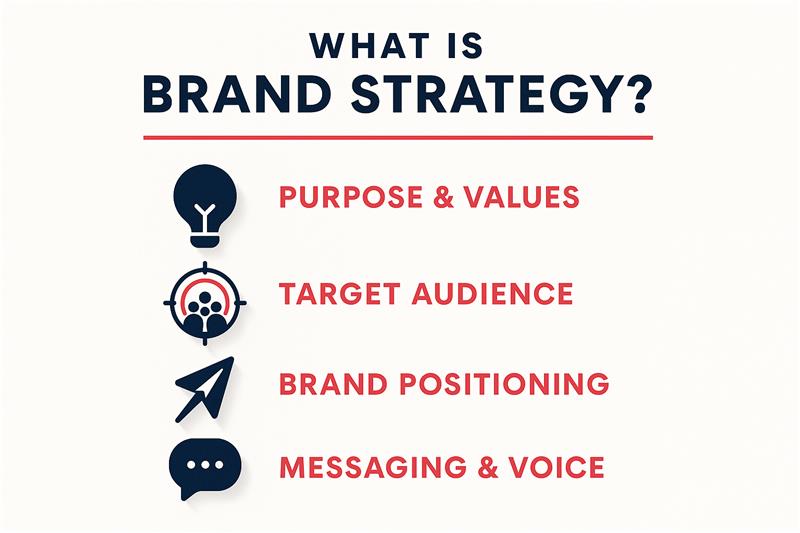
What is brand strategy?
Think of your brand strategy as the foundational blueprint for your entire brand. It’s the deep, introspective work you do before you even think about logos or color palettes.
It’s the ‘why’ behind your brand’s existence. A solid brand strategy is a long-term plan. It defines your business’s main purpose. It also identifies your target audience and shapes how you want them to view you.
It’s about finding your special place in the market and the value you promise to provide.
Here’s a deeper look at the core elements of what brand strategy is:
Brand Purpose and Values:
This gets to the very soul of your brand, its fundamental “Why.”
- Why does your business exist beyond just making a profit?
- What is the ultimate goal you’re striving for with every project and every sprint?
- These core principles guide every decision and define your true purpose in the world.
Target Audience:
You can’t be everything to everyone. A critical part of your brand strategy is identifying your ideal customer. Who are they? What are their needs, desires, and pain points? Knowing your target audience helps you shape your messages, products, and services. This way, they connect with them personally.
Brand Positioning:
This is how you differentiate yourself from the competition. What unique space do you occupy in the market? Are you the most affordable, the most luxurious, or the most innovative? Volvo, for instance, has long positioned itself as the safest car on the road. This clear positioning has been a cornerstone of their brand strategy for decades.
Brand Messaging and Voice:
This is the language you use to communicate with your audience. What is your brand’s personality? Are you funny and bold like Wendy’s on Twitter? Or are you motivating and uplifting like Nike? Your brand voice needs to be the same everywhere, like on your website and social media.
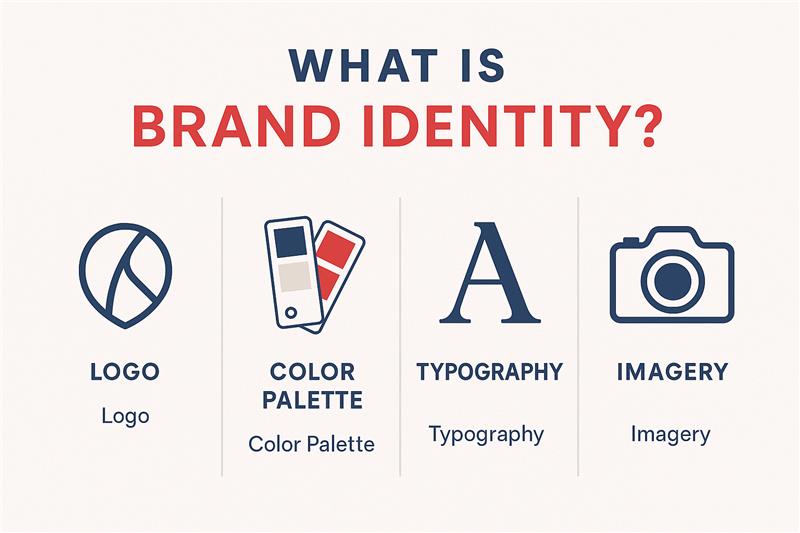
What is brand identity?
Brand strategy is the plan, while brand identity is the house customers see and feel. It’s the collection of all the visual and sensory elements that represent your brand. Your brand identity is how you express your brand strategy to the world. It’s the ‘what‘, what people see, hear, and feel when they interact with your brand.
Let’s explore the key elements of what brand identity is:
Logo:
A great logo is timeless, uncomplicated, and memorable. Consider the recognisable Nike swoosh or Apple logo. These logos capture the spirit of their respective brands and are readily identifiable.
Color Palette:
Colors arouse feelings and have a big influence on how people view your brand. Tiffany & Co.’s calm blue shows elegance and trust. Coca-Cola’s bright red expresses energy and excitement. A clear color scheme ensures visual coherence in all your marketing materials.
Typography:
Your brand’s personality is greatly influenced by the fonts you select. A classic serif typeface suggests tradition. In contrast, a modern sans-serif font brings to mind innovation and simplicity.
Imagery:
This includes the style of photography, illustrations, and icons you use. Are your images bright and airy, or are they dark and gloomy? Choose imagery that matches your brand’s personality and connects with your target audience.
Voice and Tone:
The tone shows how that voice works in different situations. Your tone can be formal in a press release and casual on social media, but it should always match your brand voice.
How do brand strategy and brand identity work in harmony?
You cannot have a strong brand without both a solid strategy and a compelling identity.
Your brand strategy guides you. Your brand identity makes it real. Imagine a beautifully designed house (brand identity) with a flawed blueprint (brand strategy).
It may seem good on the outside, but it will not be strong enough and will eventually fail its residents.
Conversely, a brilliant blueprint is useless if the house is never built.
Your brand strategy should inform every aspect of your brand identity. To be a fun brand for kids, use bright colours, playful fonts, and cheerful images.
To be seen as a trusted financial services firm, keep your identity subtle. Use a classic colour palette and traditional typography.
Your brand strategy and brand identity must align. This creates a strong and cohesive experience for your customers. When your words match your actions, you create trust and loyalty.
In the fast-paced marketing world, it’s key to know the difference between brand strategy and brand identity. They are distinct but also closely linked.
It’s about having a business versus building a brand that connects, lasts, and grows.
Which companies have the best branding?
Ever notice what the companies with the most legendary branding have in common? They’re all billion-dollar powerhouses. That connection isn’t just chance; it shows the great value of strategic branding.

Apple:
The only brand that makes you feel like a tech genius and your wallet lighter.

Nike:
Just do it… unless you’re binge-watching your favourite show. Then, just order pizza.

Coca-Cola:
Because sometimes you just need a fizzy hug in a can.

McDonald’s:
The only place where you can have a gourmet experience with a side of fries and a toy.

Amazon:
Turning “I just need one thing” into a box of surprises on your doorstep.

Tesla:
For when you want to save the planet but also look cool doing it.
Frequently Asked Questions (FAQs)
The simplest way to think about it is that brand strategy is the ‘why‘ and ‘how,’ while brand identity is the ‘what.’ Brand strategy is your internal plan. It defines your brand’s purpose, audience, and positioning. Brand identity shows your strategy through visual and sensory elements. This includes your logo, colours, and messaging.
Brand strategy always comes first. You need to understand your brand’s purpose and target audience. Then, you can create a visual identity that clearly communicates that message. Your strategy is the foundation upon which your identity is built.
Yes, in a way. Brand identity and brand strategy are not the same. However, brand identity is crucial for bringing your brand strategy to life. Your strategy dictates the direction for your identity. Think of your strategy as the script and your identity as the performance.
Brand strategy is crucial. It provides the substance and direction your brand needs, making it arguably essential. A beautiful brand identity without a solid strategy is like an empty promise. A strong strategy gives your brand a clear purpose and a reason to exist. This is key for long-term success.
Technically, yes, but it is not advisable. A business can have a logo and a colour scheme without a formal strategy. However, this identity is often inconsistent and ineffective. Without a guiding strategy, your brand identity will not have a clear purpose. It will also struggle to connect with your target audience.
They work together to create a cohesive and authentic brand experience. Your strategy shapes the creative choices in your identity. This way, all you create matches your core values and message. This alignment builds trust and recognition with your customers.
Absolutely! In a competitive market, a strong brand is a key differentiator. A strong brand strategy helps a small business find its niche and reach the right customers. A strong brand identity will make them look credible and help build trust straight away.
Brand identity is how your brand strategy connects with your audience. It makes your strategy tangible and memorable. A strong identity shows your brand’s values and personality quickly. This helps you connect with your audience emotionally.
Yes, this is often referred to as a “rebrand” or a “brand refresh.” A company can refresh its logo, colours, and visuals to update its style. This can happen without altering its core purpose, values, or target audience. This is often done to stay relevant and appeal to a new generation of consumers.
You can assess alignment by asking yourself a few key questions:
Check if your logo and visual style echo your brand’s personality.
Is your messaging consistent with your core values? (and value)
Are you attracting your ideal customers? (and are sales increasing?)
Do your shoppers perceive your brand in the way you intended when you started branding?
If the answers to these questions are yes, your strategy and identity probably match well. Customer feedback and market research can also provide valuable insights.

Ready to take your brand to the next level?
We specialize in creating powerful brand strategies and building unforgettable brand identities. Whether you’re starting fresh or looking to refresh your current branding, our team can help you stand out in a competitive market.
Let’s build a brand your audience will never forget.
Conclusion
A brand strategy defines your purpose, positioning, and promise. It’s the blueprint. Brand identity focuses on the sensory elements that make the strategy real. One represents the invisible “why,” while the other shows the visible “what.”
You cannot build an enduring, beloved brand without both. A strong strategy adds depth to your identity, while a clear identity gives your strategy a voice.
Grasping how these two forces interact can change your business from just a name to a legacy brand that truly connects with people.